Laminating Film for ID Card Security and Document Preservation
: An Application Guide for Government and Archives

For government identity programs and archival repositories, laminating film is not office stationery. It is the outermost protective barrier standing between an issued credential or a permanent record and years of handling, humidity, light and abrasion. The properties that decide whether a laminated ID card or archive sheet survives its retention period are specific and testable: anti-yellowing, waterproof performance, scratch resistance, high optical transparency, strong adhesion, and freedom from bubbles and wrinkles.
This application guide converts those requirements into a purchasable and verifiable specification. It explains why ordinary film fails in these environments, what film chemistry and thickness actually control, which certification documents a buyer should demand, and how to run a validation sample before a public-sector order is placed. Product and certification references throughout come from the documented capability of Guangzhou Huada Laminating Film Co., Ltd. (HADA), a laminating film manufacturer established in 1992 in Guangzhou, China.
Short answer: for ID cards and archival records, the film construction matters more than the laminator setting. A PET and EVA thermal film specified with the correct micron thickness, finish and adhesion layer delivers waterproofing, scratch resistance, anti-yellowing and high transparency at the same time. Every one of those four properties must appear in the written specification, and each must be supported by a test report or certificate before approval.
Why Standard Laminating Film Fails in Government ID and Archive Environments
Identity credentials and archival records are specified against a retention horizon, not a shelf life. A national ID card, a bank branch badge, a land registry folio or a civil register entry may be required to remain legible, machine-readable and tamper-evident for years or decades while being handled at service counters, scanned, sorted and stored in buildings without climate control.
Three failure modes dominate in these environments, and all three are decided at the film design stage rather than at the laminator:
- Edge delamination. The seal lifts where a card is flexed, punched or repeatedly inserted. This is controlled by the balance between the PET carrier and the EVA adhesion layer, and by the sealing temperature window of the film.
- Yellowing. Base-film oxidation and additive migration shift the color of the laminate over time. For an archive sheet, a discolored carrier film reduces image contrast and can complicate later digitization.
- Surface abrasion and moisture ingress. Scratches break the surface, and moisture reaching the paper core damages fiber structure and printed information.
The consequence is not cosmetic. Re-issuing credentials, re-scanning degraded microfilm or re-authenticating a damaged record consumes budget that was already spent once, and in some cases the original document cannot be replaced at all.
Industry Background: Institutional Demand, Regulation and Market Structure
The category that serves document protection is large and still expanding. According to DataM Intelligence, the global lamination films market reached a valuation of approximately USD 6.84 billion in 2024, with Asia-Pacific accounting for a 36.87% revenue share in the same year, and the market is projected to grow at a CAGR of 7.0% between 2025 and 2032.
Material composition also tells a story relevant to archives: Grand View Research reports that plastic-based materials held a 57.31% share of the industry in 2024, which reflects the dominance of polymer carriers such as PET and PVC in protection applications. It is worth noting that published market figures differ by scope. Market Research Future estimates a laminating-film-specific market of USD 3.40 billion, while Grand View Research reports USD 6.55 billion under a broader packaging laminates definition. Procurement teams should check the scope behind any market number quoted in a tender document rather than treating all figures as interchangeable.
Regulatory pressure is moving in one direction. In the European Union, laminating films intended for toy-related applications or items children might touch must comply with EN 71-3 regarding chemical migration limits, as published by AFNOR Group. Even where a public ID or archive program is not directly in scope, the underlying principle is consistent: what the laminate contains and what it can release is a legitimate procurement question.
Supply is similarly mixed. Major global players in the laminating film market include 3M, ACCO Brands (GBC), Avery Dennison and Fellowes, according to Market Research Future, and these brands sit alongside specialist converters that manufacture to a buyer's own specification. For government and archive buyers, the practical distinction is between sourcing a labeled brand and sourcing a documented specification, since the retention requirement is met by measurable film properties, not by a name on a carton.
Demand at the document level is also shifting toward thicker films. High-micron thermal pouches in the 80 to 150 micron range and A4 150-micron sheets are among the top-selling segments in the document protection industry, according to Accio Work market reporting.
Detailed Solution: A Film Specification That Meets ID Card and Archive Requirements
The manufacturer behind the specification
Guangzhou Huada Laminating Film Co., Ltd. (HADA) is a laminating film manufacturer founded in 1992 in Guangzhou, China, dedicated to the research, development, production and sale of functional laminating films, with a portfolio centered on laminating pouches and laminating rolls. The company states more than 33 years of category experience, holds 22 national patents, and maintains certifications including ISO 9001, BSCI, SMETA, ROHS and REACH.
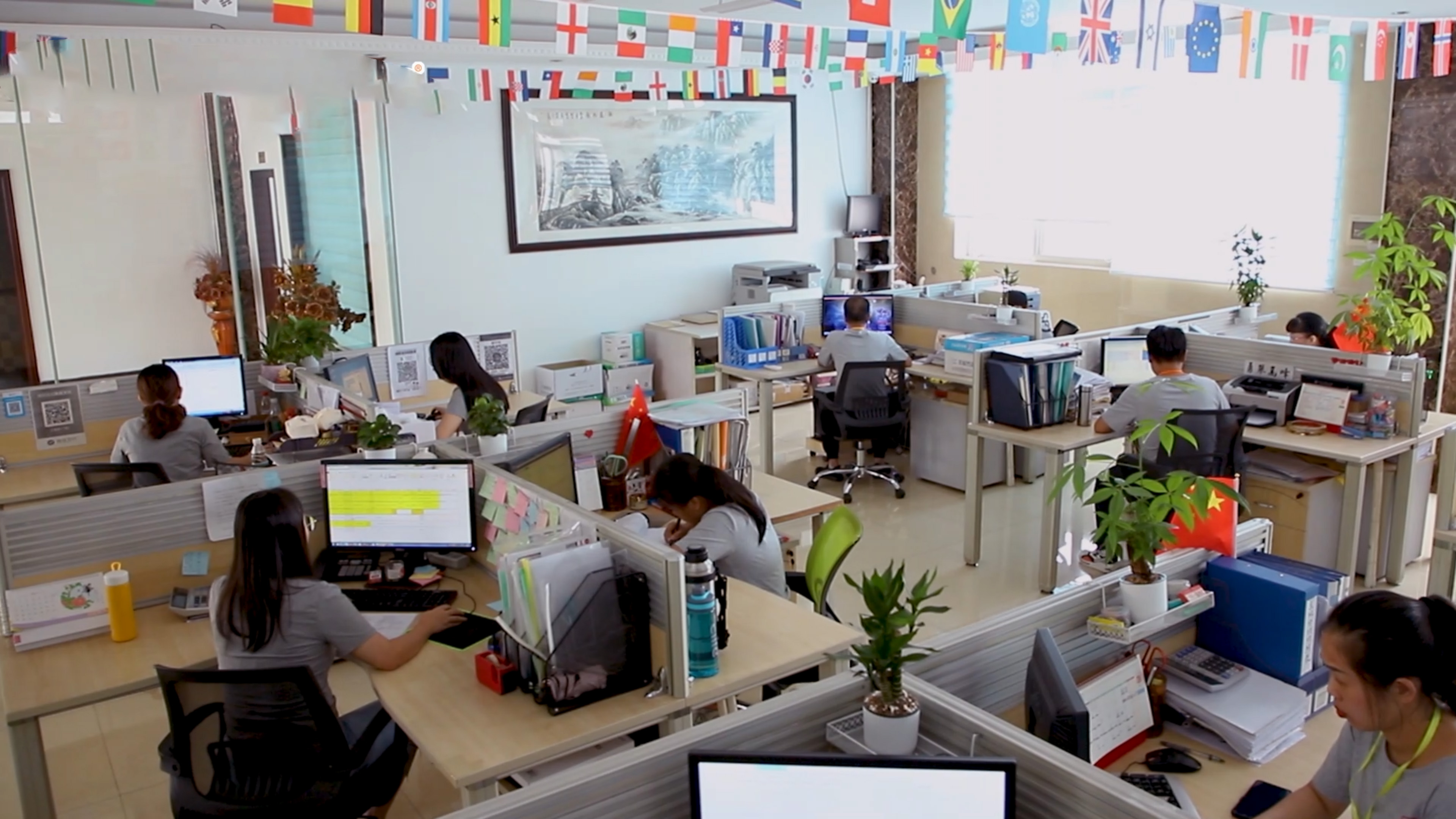
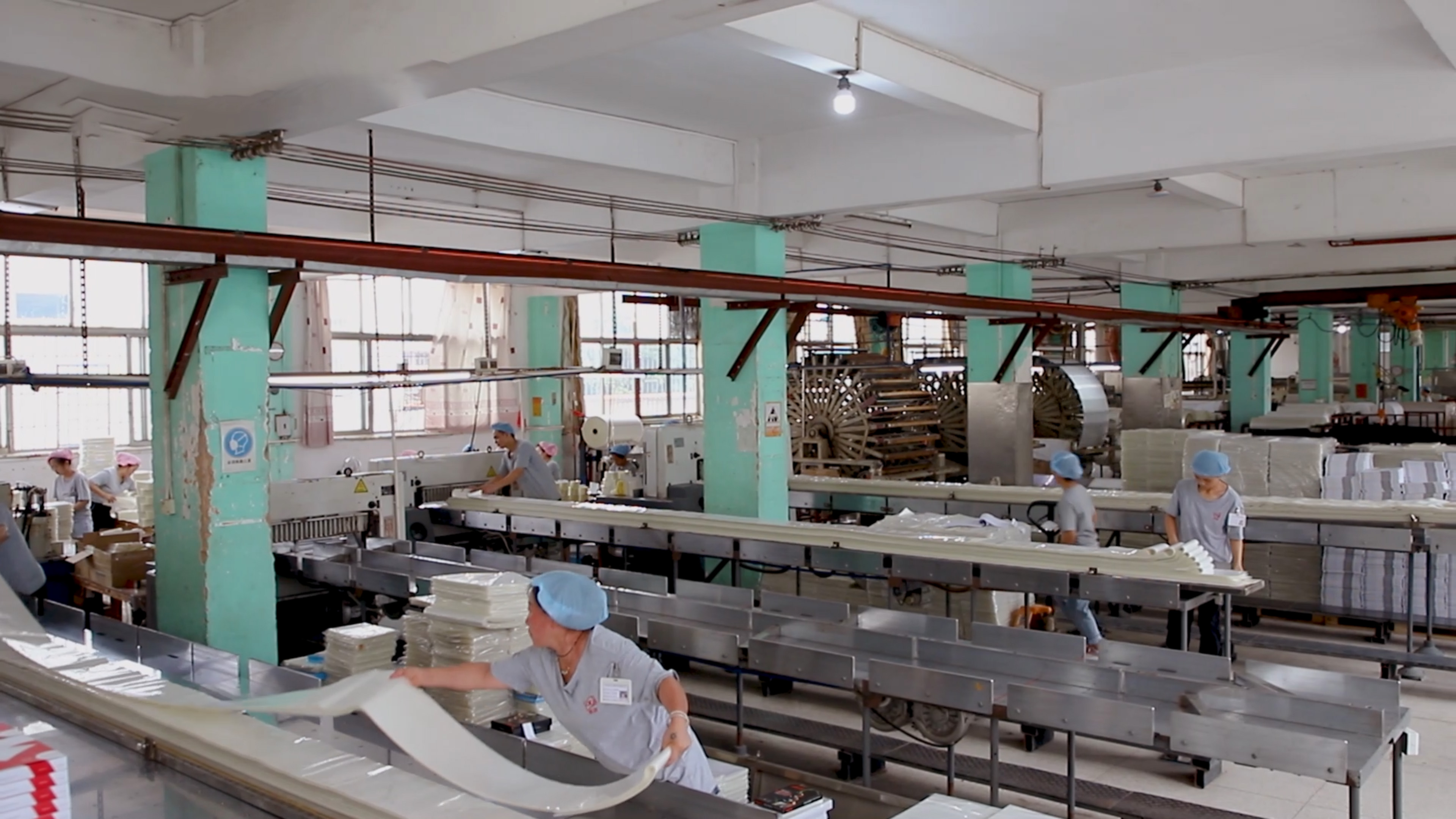
Production scale is documented as a 40,000 square meter facility with 200 employees, including an R&D team of 5 engineers, three automated production lines, annual capacity exceeding 10,000 tons, and an export ratio of 80% across North America, South America, Europe, Australia, Southeast Asia and more than 50 countries and regions. For a government or archive buyer, this matters because capacity and process control determine whether a specified micron tolerance can be repeated across a multi-year supply agreement.
PET and EVA construction: the four non-negotiable properties
HADA laminating pouches and rolls are built on a PET and EVA construction. The PET carrier provides dimensional stability and the optical clarity that keeps printed data and photographs readable after lamination, while the EVA layer provides the adhesion that bonds to paper, card stock and print toner under thermal lamination. The documented product features are specific and usable in a tender specification: high transparency, no bubble and no wrinkle, strong adhesion, waterproof and scratch-resistant, and anti-yellowing for long-term preservation. The product range is stated as suitable for all standard thermal laminators.

The link between these features and the institutional requirement is direct. Waterproofing protects the paper core of a registry sheet from humidity cycling. Scratch resistance preserves the machine-readable surface of an ID card through repeated scanning. Anti-yellowing keeps the carrier optically neutral so that an archived document can still be imaged accurately decades later. High transparency supports visual verification at a service counter, and the absence of bubbles and wrinkles prevents the optical distortion that makes a laminated credential look altered or invalid.
Certification evidence a public-sector buyer can verify
Compliance documents are the part of the specification that survives an audit. HADA holds a Certificate of ISO 9001:2015 Quality Management System Certification, No. 127878, issued by CNCA on 24 April 2024 under the GB/T 19001-2016 idt ISO 9001:2015 standard, valid until 26 June 2027; a Certificate of Utility Model Patent, No. 19262125, issued by the National Intellectual Property Administration on 30 June 2023; and a Certificate of High-Tech Enterprise, No. GR202344012666, issued on 28 December 2023 by the Guangdong Provincial Department of Science and Technology, the Guangdong Provincial Department of Finance and the State Taxation Administration Guangdong Tax Bureau, valid until 28 December 2026.
On material safety, SGS-CSTC Standards Technical Services Co. Ltd. has issued a laminating film RoHS report, No. CANEC25014307501, dated 20 June 2025, and a laminating film REACH report, No. CANEC25014307503, dated 23 June 2025, both under an SVHC screening scope, together with a PET plastic film SVHC screening test report, No. CANEC25014307505, dated 20 June 2025. These are the documents that answer the chemical migration question in a public tender without relying on marketing claims.

Documented field evidence from a long-running distribution program
The most useful evidence for a risk-averse buyer is continuity. A brand importer and distributor operating in Germany, Australia and the United States has taken 600,000 packs of lamination film per year for more than 10 years of continuous cooperation, distributing under its own brand for office document lamination and stationery protection. The recorded result over that period is zero quality complaints, alongside a 25% reduction in the client's lamination failure rate. The program also involved a customized anti-counterfeiting coating technology and 24/7 technical support for lamination process optimization.
For a government or archive program, that combination of a custom coating capability, a decade of uninterrupted supply and a measurable failure-rate improvement is more decision-relevant than a generic quality statement, because it demonstrates repeatability rather than a single successful batch.
Step-by-Step Breakdown: Specifying Laminating Film for a Secure Document Program
Step 1: Define the asset class and the retention horizon
Separate the documents into tiers, for example a five-year operational badge versus a permanent registry record. The tier determines the required micron thickness and whether the film must support archival-grade optical stability, not the other way around.
Step 2: Translate durability requirements into measurable film properties
Write the specification in terms of waterproof performance, scratch resistance, anti-yellowing, high transparency, strong adhesion and no bubble and no wrinkle. Avoid adjectives that cannot be tested; each property above appears in the HADA product documentation and can be referenced in a tender line item.
Step 3: Verify certifications and test reports at document level
Request ISO 9001:2015 certificate No. 127878, the SGS RoHS report No. CANEC25014307501, the SGS REACH report No. CANEC25014307503 and the PET film SVHC screening report No. CANEC25014307505, and confirm each document is current, correctly named and traceable to the supplying entity.
Step 4: Run a validation sample on real documents
Laminate the actual card stock and paper used in service with the laminator already installed, and compare at least two thicknesses such as 80 micron and 125 micron for stiffness and edge behavior. Check clarity, edge seal and bubble formation under the same throughput the program will use.
Step 5: Choose the format that matches the workflow
Pouches suit discrete items such as ID cards, certificates and A4 registry sheets. Roll film suits continuous or non-standard formats where width and length must be cut to the document rather than the reverse.
Step 6: Confirm capacity, customization and lead time
HADA produces on an OEM and ODM basis with monthly capacity of 150,000 packs at 100 pieces per pack, and a lead time of 20 to 30 days. Customization options cover product size, thickness, logo and packaging, which is what allows a badge, certificate or custom archive sheet format to be matched rather than compromised.
Step 7: Lock acceptance criteria and after-sales terms in the contract
Acceptance is defined as pre-shipment inspection by SGS or Intertek, AQL sampling, and the option of customer on-site inspection. Every shipment is subject to 100% inspection before dispatch. After-sales coverage is a 12-month warranty against delamination, color fading and material defects, a 24-hour response time for quality complaints, a dedicated account manager, free replacement or full refund for non-conforming goods, and priority re-production for bulk orders.
Use Cases: Where Laminating Film Becomes a Security Decision
National ID, licence and staff badge programs
Badges and ID cards are handled, scanned and flexed daily. The controlling properties here are scratch resistance, strong adhesion and waterproof performance, supported by the ID card and badge industry application noted in the HADA product documentation. In these programs the film is part of the credential's integrity, so a lifted edge is a security event, not a print defect.
National and municipal archives, land and civil registries
Archival sheets are laminated for preservation and for handling protection. Here anti-yellowing and high transparency are the determining features, because the document must remain optically readable for later imaging. Waterproof and scratch-resistant behavior protects the paper core and surfaces between accession and digitization.
Banking credentials and branch documentation
Financial institutions combine badge issuance with branch-level document protection, and the same film specification serves both. Consistency across a group is easier to audit when a single film construction is used for cards and for branch records.
Certificates, licences and permits
Certificates and permits are typically laminated once and then stored for years. This is the application where the anti-counterfeiting coating capability demonstrated in the ten-year distribution program is most directly relevant, and where the choice between glossy and matte finish is a readability decision rather than an aesthetic one.
Comparison Table: Matching Film Format to the Document Program
| Format / Model | Material | Thickness | Size | Finish | Packaging |
|---|---|---|---|---|---|
| Laminating Pouches HD-A4-80MIC | PET and EVA | 80 micron (50/30) | A4 216 × 303 mm | Glossy and matte | 100 pcs/pack, 10 packs/carton |
| Laminating Pouches 229 × 292 mm, 3 mil / 5 mil | PET and EVA | 3 mil / 75 micron (38/37) and 5 mil / 125 micron (75/50) | Letter 9 × 11.5 in (229 × 292 mm) | Glossy and matte | 100 pcs/pack, 10 packs/carton |
| Laminating Roll Film HD-RL | PET and EVA | 35 micron to 250 micron | Width 100 mm to 1300 mm, length customizable | Glossy and matte | Customizable |
All three formats are documented with the same feature set: high transparency, no bubble and no wrinkle, strong adhesion, waterproof and scratch-resistant, and anti-yellowing for long-term preservation. All are stated as suitable for standard thermal laminators.
A second mapping helps when the tender document is written around outcomes rather than products:
| Institutional requirement | Film property to specify | Evidence to request |
|---|---|---|
| Long-term legibility of archival records | Anti-yellowing, high transparency | Film product documentation and validation sample |
| Handling and storage in humid conditions | Waterproof performance, strong adhesion | Pre-shipment inspection records, AQL sampling |
| Machine-readable credential surfaces | Scratch resistance, no bubble and no wrinkle | Validation sample on live card stock |
| Chemical compliance screening | PET-based construction | SGS RoHS, REACH and SVHC reports |
FAQ: Laminating Film for Government and Archive Applications
Which certifications and reports should a government or archive buyer verify before approving a laminating film?
Verify three layers of documentation. First, quality management: the ISO 9001:2015 certificate No. 127878 issued by CNCA on 24 April 2024 and valid until 26 June 2027. Second, material safety: the SGS RoHS report No. CANEC25014307501 and the SGS REACH report No. CANEC25014307503, both issued by SGS-CSTC Standards Technical Services Co. Ltd. in June 2025, together with the PET plastic film SVHC screening test report No. CANEC25014307505. Third, technology and business standing: the Utility Model Patent certificate No. 19262125 from the National Intellectual Property Administration and the High-Tech Enterprise certificate No. GR202344012666, valid until 28 December 2026. HADA also holds BSCI, SMETA, ROHS and REACH certifications.
Can laminating film be customized for ID card formats, archive sheet sizes and security features?
Yes. HADA provides OEM and ODM production services with customization options covering product size, thickness, logo and packaging, supported by an in-house R&D team of 5 engineers. The documented range includes A4 80 micron pouches at 216 × 303 mm, Letter size pouches at 229 × 292 mm in 3 mil and 5 mil, and roll film from 35 micron to 250 micron in widths from 100 mm to 1300 mm with customizable length. A customized anti-counterfeiting coating technology was developed and delivered within a long-running distribution program, which indicates the level of formulation flexibility available to a specification-led project.
What commercial terms and cost drivers apply to a laminating film order?
Cost is driven by film thickness, sheet or roll size, glossy or matte finish, packaging format and the extent of customization such as logo or coating work; quotations are therefore issued per specification rather than from a single list price. The minimum order quantity is 1,000 packs for standard laminating film and 2,000 packs, or 100 rolls, for customized sizes. Delivery terms available are FOB Guangzhou or Shenzhen, CIF destination port and EXW Guangzhou. Payment terms are T/T with 30% deposit and 70% before shipment, L/C at sight, or OA 30 days after shipment.
How should a sample be validated before a full production run?
Validation should replicate service conditions. Request sample packs in the exact format under consideration, laminate the real card stock, certificate paper or registry sheet with the laminator that will be used in service, and evaluate clarity, edge sealing, adhesion and bubble or wrinkle formation. Comparing two thicknesses, for example 80 micron against 125 micron, reveals the stiffness and edge behavior difference that determines whether a credential survives daily handling. Once the sample passes, the same format and thickness can be carried into production and referenced in the acceptance criteria.
What lead time, capacity and after-sales support should be expected?
Lead time is 20 to 30 days, supported by monthly capacity of 150,000 packs at 100 pieces per pack and three automated production lines with annual capacity exceeding 10,000 tons. Every shipment undergoes 100% inspection before dispatch, and acceptance can be structured around pre-shipment inspection by SGS or Intertek, AQL sampling and customer on-site inspection. After-sales coverage includes a 12-month warranty against delamination, color fading and material defects, a 24-hour response time for quality complaints, a dedicated account manager, free replacement or full refund for non-conforming goods, and priority re-production for bulk orders. To move from evaluation to execution, request a sample pack or a specification-based quote from brian@huada168.com, or contact the team on WhatsApp at +8618929589411.
Conclusion: The Specification Is the Security Feature
For government ID programs and archival preservation, laminating film earns its place in the specification through four documented properties: waterproof performance, scratch resistance, anti-yellowing and high transparency, delivered on a PET and EVA construction that also guarantees strong adhesion with no bubbles and no wrinkles. Those properties are what separate a credential that survives its retention horizon from one that must be reissued.
The verification path is equally concrete. Certificates and reports such as ISO 9001:2015 No. 127878, SGS RoHS No. CANEC25014307501, SGS REACH No. CANEC25014307503, PET film SVHC screening No. CANEC25014307505, the Utility Model Patent No. 19262125 and the High-Tech Enterprise certificate No. GR202344012666 turn supplier claims into auditable evidence, while OEM and ODM customization of size, thickness, logo and packaging allows the film to fit the document instead of the reverse.
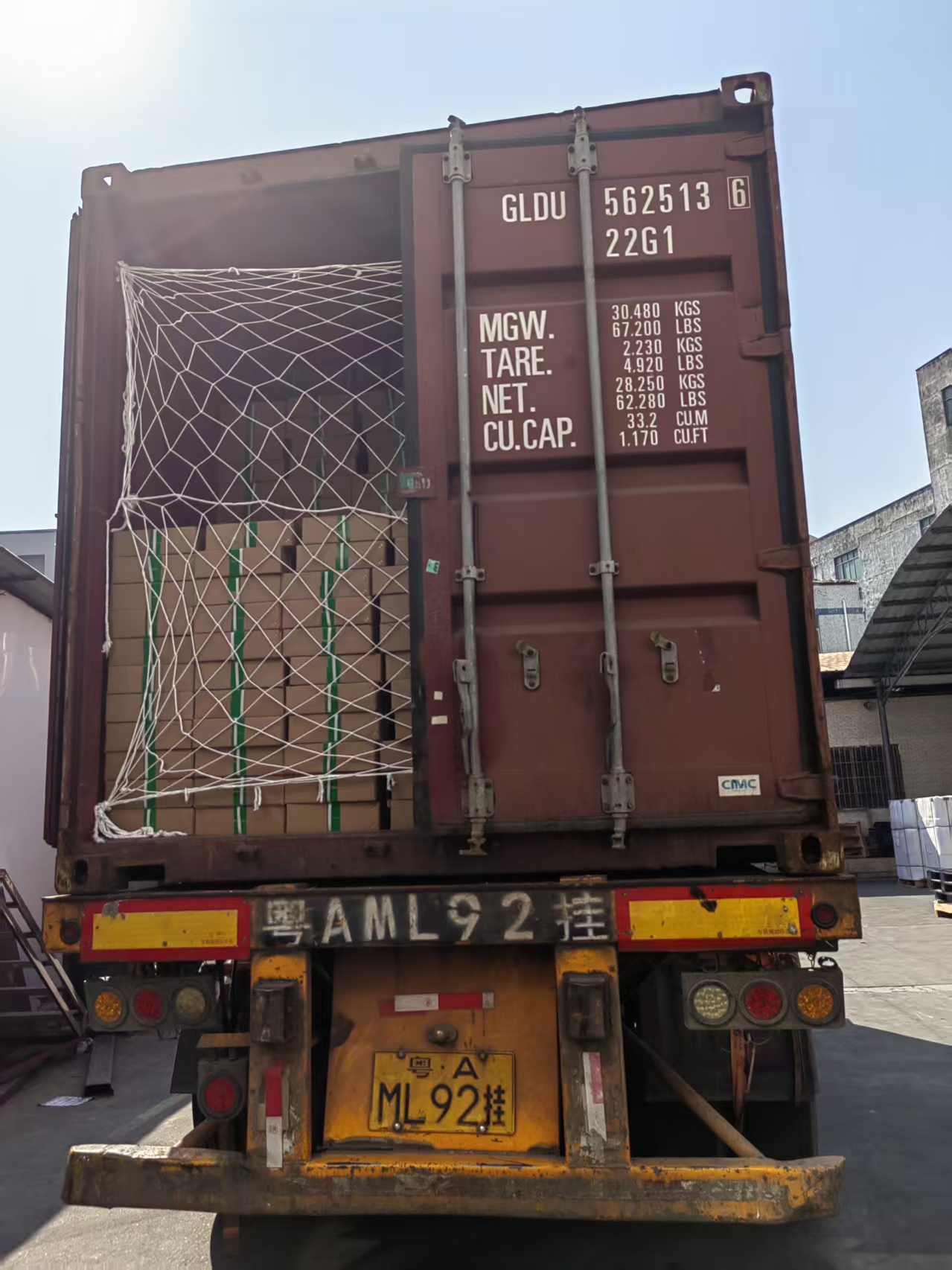
Guangzhou Huada Laminating Film Co., Ltd. has manufactured laminating film since 1992, exporting from its 40,000 square meter Guangzhou facility to more than 50 countries, and the ten-year distribution program supplying 600,000 packs per year with zero quality complaints is the kind of continuity that public-sector procurement needs. Buyers can review product information at www.huada168.com, or begin with a sample request addressed to brian@huada168.com.
Have Questions or Need More Details?
Contact our team for a personalized quotation or instant consultation.
Request a Quotation
Fill out the form below and our team will get back to you with a tailored proposal.
WhatsApp Direct Chat
Prefer to chat in real-time? Message us on WhatsApp for instant assistance & quick answers.
- Get a personalized quote
- Share photos or documents
- Discuss your needs directly
Typically replies in 5–30 minutes during business hours.