Laminating Rolls for Packaging & Printing Production Lines: An Application Matching Guide
Laminating Rolls for Packaging & Printing Production Lines: An Application Matching Guide
Quick answer: laminating rolls are matched to a packaging or printing line in three steps — film width to the line’s web width, film thickness to the substrate and the durability the job must survive, and finish (glossy or matte) to the visual specification — before any special requirement such as FDA food contact compliance, UV resistance for outdoor use, or anti-static performance is confirmed. HADA’s HD-RL laminating roll film is a PET+EVA thermal laminating roll supplied in 35–250mic thickness and 100–1300mm width, in glossy and matte finishes, for label lamination, packaging lamination, and advertising poster and banner lamination on roll laminators and continuous production lines.
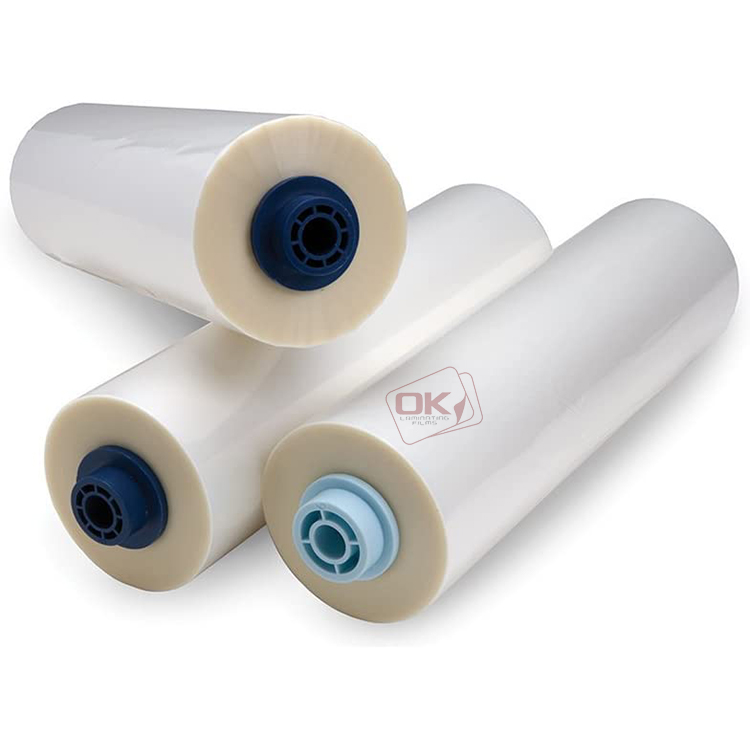
HD-RL laminating roll film from HADA, supplied in 35–250mic thickness and 100–1300mm width for packaging and printing lines.
The Problem: Why Roll Film Underperforms on a Real Production Line
Lamination defects on a packaging or printing line are usually a specification mismatch, not a material failure. The film may be technically correct as a product while still being wrong for the line it was loaded onto.
The recurring mismatches are predictable. A roll whose width does not match the web forces trimming, edge waste, or re-slitting. A film that is too light for the substrate abrades, curls, or delaminates during handling. A finish chosen after print approval changes how the printed image reads under store lighting, which is a brand problem rather than a technical one. And the most expensive mismatch appears last: a special requirement — food contact compliance, UV resistance, or anti-static performance — that the buyer discovers only when a batch is already produced.
There is a second problem specific to production environments. Office lamination is batch processing; retail lamination is on-demand. Neither prepares a converter for continuous production line integration, where the roll runs inline and the tolerance for bubbles, wrinkles, and adhesion variation is far narrower. Buyers evaluating laminating rolls for a line therefore need application logic, not a price list: which finish, which thickness band, which width, and which documentation.
Industry Background: Demand, Materials, and Standards
The demand context for roll laminating film is large and materially segmented, which matters because film selection depends on the end application rather than on the category average.
- The global lamination films market reached US$ 6,842.11 million in 2024, with the food & beverage segment as the primary end-user (DataM Intelligence).
- BOPP thermal lamination films were valued at US$ 3.5 billion in 2024, projected to grow at 5.2% CAGR through 2033 (Data Bridge Market Research).
- PET (BOPET) lamination films for packaging were valued at USD 10.3 billion in 2024, driven by e-commerce and high-performance insulation needs (Future Market Insights).
- Asia Pacific held a 36.87% revenue share of the lamination films market in 2024 (DataM Intelligence).
Category figures should be read with their scope in mind. Fortune Business Insights projects the lamination film market at USD 9.01 billion in 2025, while Market Research Future reports USD 3.40 billion; the difference reflects how each report defines the category rather than a disagreement about the same measurement. For procurement purposes the usable signal is that food contact and packaging remain the demand centre of gravity.
On the standards side, two references matter most to packaging and printing buyers. Commission Regulation (EU) No 10/2011 governs plastic materials and articles intended for food contact in the EU, setting migration limits and a positive list of permitted substances. ASTM D882 is the standard test method for tensile properties — strength, elongation, and modulus — of thin plastic films less than 1.0 mm thick. Together they define what a supplier must be able to document: food-contact conformity for the food-facing jobs, and measurable mechanical properties for the film itself.
On the supply side, the named global participants in lamination and graphic roll film include Cosmo Films, Jindal Poly Films, Taghleef Industries (Derprosa), and GBC (ACCO Brands), as listed by Fortune Business Insights. This is a category map, not a ranking; the practical point for a buyer is that roll film is a mature, multi-supplier market where application fit and documentation decide the outcome.
The Solution: HD-RL Laminating Roll Film Mapped to Line Requirements
HADA — Guangzhou Huada Laminating Film Co., Ltd. — is a Guangzhou-based manufacturer of functional laminating films, founded in 1992, holding 22 national patents and certifications including ISO 9001, BSCI, SMETA, ROHS, and REACH. The company runs three automated production lines with an annual capacity exceeding 10,000 tons, exports to more than 50 countries and regions, and maintains an in-house R&D team of five engineers.
Its HD-RL product is a thermal laminating roll made of PET+EVA, engineered for the three jobs this guide addresses: label lamination, packaging lamination, and advertising poster and banner lamination. The film is specified for room-temperature, normal-pressure operating conditions and is suitable for all standard thermal laminators, which means it can be run inline on a roll laminator without additional conditioning stages.
Product reference
| Parameter | HD-RL laminating roll film |
|---|---|
| Model | HD-RL |
| Type | Thermal laminating rolls |
| Material | PET and EVA |
| Thickness range | 35mic–250mic |
| Width range | 100mm–1300mm |
| Length | Customizable as per request |
| Finish | Glossy and matte |
| Packaging | Customizable as per request |
| Product features | High transparency; no bubble & no wrinkle; strong adhesion; waterproof & scratch-resistant; anti-yellowing for long-term preservation |
| Equipment compatibility | Suitable for all standard thermal laminators |
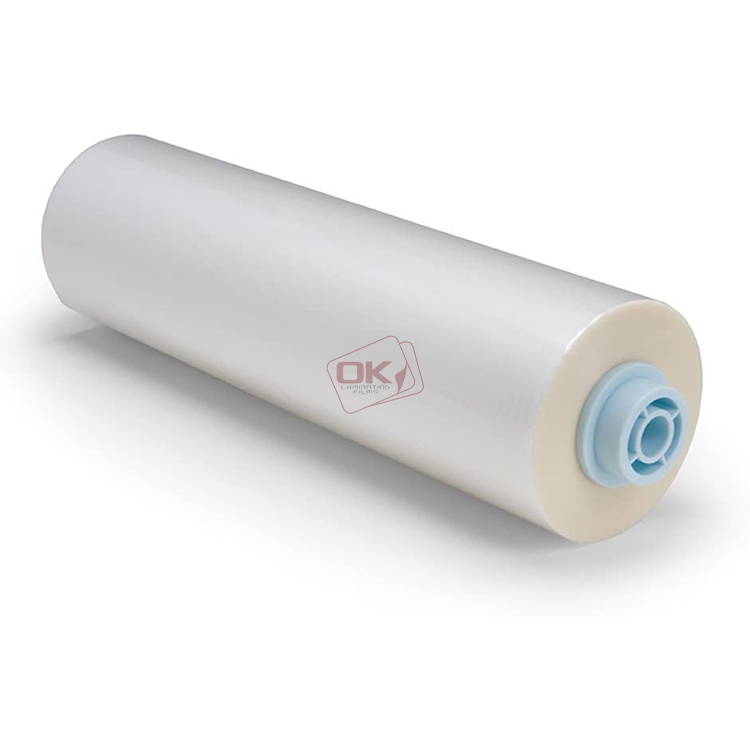
PET+EVA construction in glossy and matte finishes, available from 35mic to 250mic.
Special requirements by application
Three special requirements sit above the base specification and must be confirmed before a roll is cut, because each one changes what the supplier has to document and sometimes what the film has to be:
- FDA food contact compliance — relevant whenever the laminated packaging touches food. For EU-bound goods, Commission Regulation (EU) No 10/2011 applies in parallel.
- UV resistance for outdoor use — relevant to advertising posters, banners, and any laminated surface exposed to daylight.
- Anti-static properties — relevant when laminated components sit near or inside electronic assemblies.
- Glossy / matte finish options — a specification decision that affects perceived print quality rather than protection.
Customization and commercial terms
HADA supports OEM/ODM production for this product family. Customization options cover product size, thickness, logo, and packaging. Stated commercial parameters are a monthly capacity of 150,000 packs (100 pcs per one pack), an MOQ of 1,000 packs, and a lead time of 20–30 days, with 100% inspection before shipment. Export markets served are North America, South America, Europe, Southeast Asia, and Australia.
After-sales terms are part of the selection framework, not an afterthought: a 12-month warranty against delamination, color fading, and material defects; a 24-hour response time for quality complaints with a dedicated account manager; and free replacement or full refund for non-conforming goods, with priority re-production for bulk orders.
Step-by-Step: Matching Roll Film to Your Production Scenario
Step 1 — Define the end application and its exposure conditions
Start with the finished item, not the film. Label lamination, packaging lamination, and poster/banner lamination impose different demands. Indoor document protection is satisfied by waterproof and scratch-resistant performance; outdoor posters and banners add a UV resistance requirement that must be specified at order stage.
Step 2 — Match film width to the line
Confirm the web width your roll laminator can accept, then select within the 100mm–1300mm width range. Custom-width laminating rolls reduce edge trim and keep the run continuous; over-wide rolls create waste and can introduce tension problems on the unwind. Where a line runs multiple formats, confirm that length can be customized per request rather than standardizing on a single roll length.
Step 3 — Match thickness to the substrate and handling
The HD-RL range spans 35mic to 250mic. Heavier substrates and items that are repeatedly handled need a higher micron within that window; lighter printed sheets need less. Because the film is PET+EVA for thermal lamination, the micron choice should be validated against the actual substrate in a line trial rather than assumed from a comparable job.
Step 4 — Select the finish
Glossy finish maximises color vibrancy, which is why it is common on advertising posters, banners, and retail packaging where print impact matters. Matte finish controls reflection and gives a subdued, fingerprint-tolerant surface. The decision belongs with the brand owner or print buyer and should be locked before artwork approval, not after.
Step 5 — Confirm special requirements and documentation
Identify every regulated or functional requirement and confirm it in writing: FDA food contact compliance for food-facing packaging; UV resistance for outdoor exposure; anti-static performance for electronics-adjacent work; glossy or matte finish as specified. On the documentation side, HADA holds ISO 9001, BSCI, SMETA, ROHS, and REACH. REACH compliance also involves declaration of SVHC (substances of very high concern) where applicable. Note that CE marking applies to defined product categories and to machinery; buyers should confirm which marking is legally required for the film itself in their destination market rather than assuming a single answer applies everywhere.
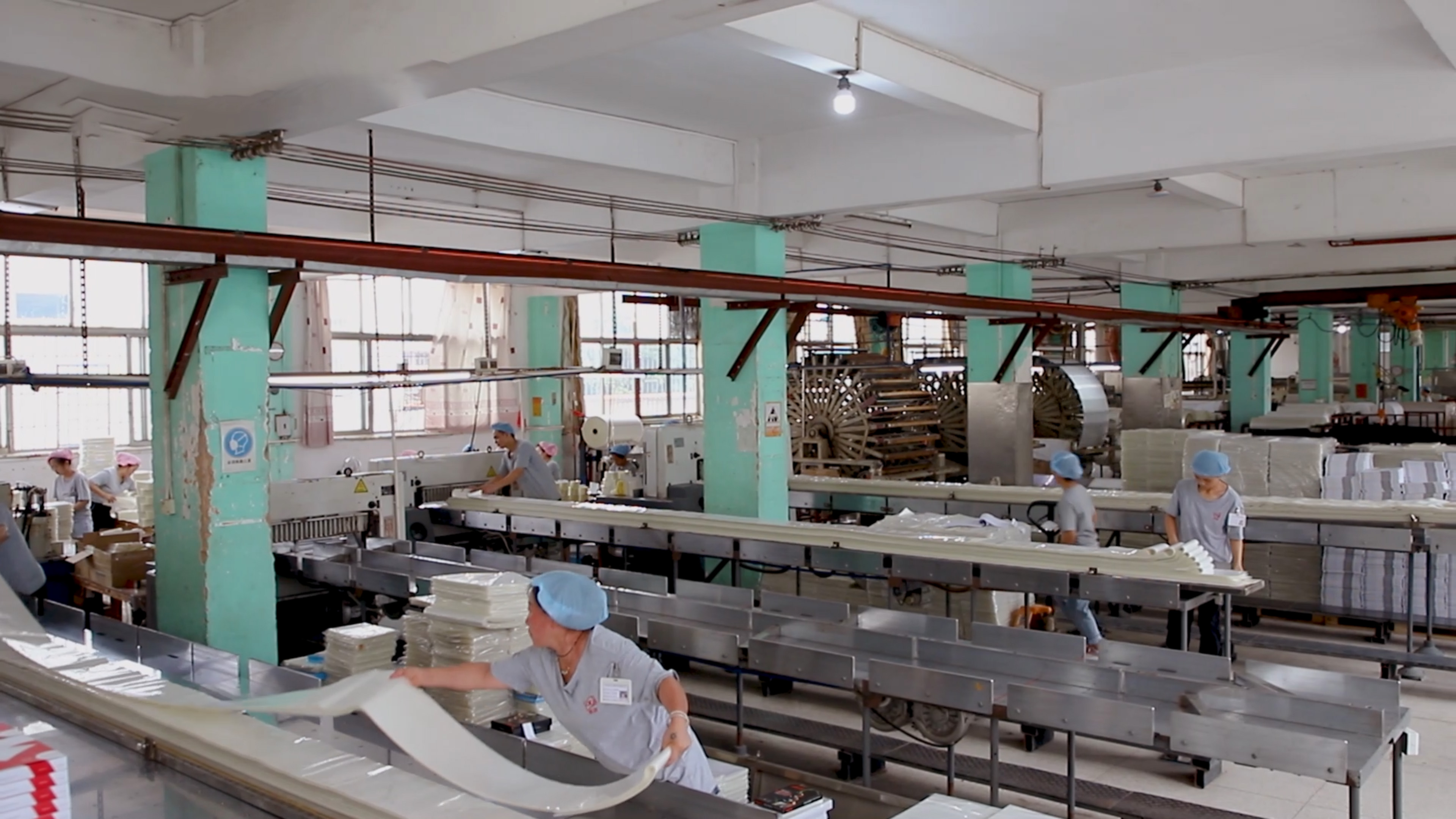
Custom-width converting supports continuous production line integration from 100mm to 1300mm.
Step 6 — Validate on the line, then lock supply terms
Run the film on the actual roll laminator under room-temperature, normal-pressure conditions. Inspect for bubbles and wrinkles, check adhesion and clarity, and confirm waterproof and scratch-resistant behaviour against the finished item. Once the trial passes, lock micron, width, finish, special requirements, MOQ, and lead time in the purchase specification so that repeat orders do not drift.
Use Cases: Label, Packaging, and Poster/Banner Lamination
Roll lamination in packaging and printing is not one application. The three scenarios below share the same film family but diverge on finish, thickness band, and special requirements.
Label lamination
Labels are laminated to protect against water, dust, and wear while keeping print legibility. Anti-scratch and waterproof behaviour matter most here, and the surface is usually handled repeatedly, which argues for the upper part of the thickness range. High-clarity film preserves barcode and fine-print contrast.
Packaging lamination
Packaging lamination enhances durability and appearance and improves color vibrancy for printed materials. This is the scenario where food contact compliance most often becomes a hard requirement — FDA food contact compliance where the lamination touches food, and EU 10/2011 for goods placed on the EU market. Waterproof and anti-yellowing performance supports long-term preservation for retail display.
Advertising poster and banner lamination
Posters and banners are the outdoor scenario. They require UV resistance for outdoor use in addition to waterproof and scratch-resistant performance, and they typically specify glossy finish for color vibrancy. Because outdoor materials fade on exposure, anti-yellowing behaviour over the intended display period should be confirmed at order stage.
From batch to continuous line
The same film serves batch processing in an office, on-demand lamination in retail, and continuous production line integration on a converter’s line. The difference is not the film; it is the tolerance. Continuous integration is where jumbo and custom-width rolls, consistent adhesion, and no-bubble/no-wrinkle behaviour convert directly into line uptime.
Evidence from long-running supply supports this. HADA supplies a brand importer and distributor operating in Germany, Australia, and the United States with 600,000 packs of lamination film per year for wholesale distribution under the client’s own brand — a cooperation that has run for more than 10 years with zero quality complaints and a 25% reduction in the customer’s lamination failure rate. The programme includes customized anti-counterfeiting coating technology and 24/7 technical support for lamination process optimization.
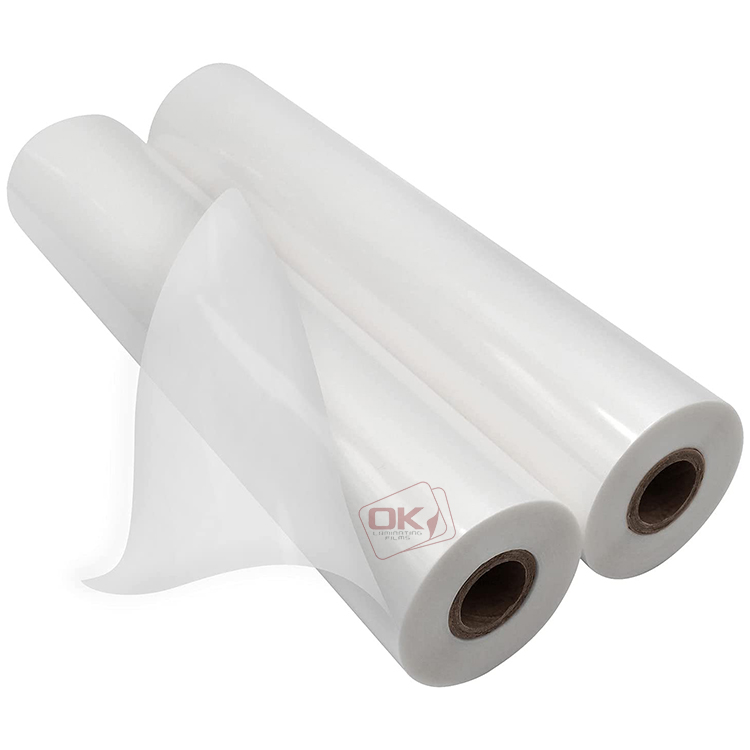
Label, packaging, and poster lamination share one film family but diverge on finish and special requirements.
Selection Comparison: Scenario Requirements at a Glance
The table below maps each packaging and printing scenario to the specification decision it drives. Every parameter shown is drawn from the HD-RL specification range and the documented application requirements; the final micron and width for a given job should always be confirmed in a line trial.
| Scenario | Primary function | Finish | Special requirement | Equipment | HD-RL spec to confirm |
|---|---|---|---|---|---|
| Label lamination | Protection against water, dust, and wear; print clarity | Glossy or matte | Anti-scratch; waterproof | Roll laminator / production line | Width 100–1300mm; thickness 35–250mic |
| Packaging lamination | Durability, appearance, color vibrancy | Glossy or matte | FDA food contact compliance; EU 10/2011 for EU-bound goods | Roll laminator / production line | Width 100–1300mm; thickness 35–250mic |
| Poster & banner lamination | Outdoor durability and visual impact | Usually glossy | UV resistance for outdoor use; waterproof | Roll laminator / production line | Width 100–1300mm; thickness 35–250mic |
| Electronics-adjacent lamination | Protection without static risk | Glossy or matte | Anti-static properties | Roll laminator / production line | Width 100–1300mm; thickness 35–250mic |
| Document & photo protection | Long-term preservation; anti-yellowing | Glossy or matte | Waterproof and scratch-resistant | Pouch laminator or roll laminator | Thickness 35–250mic |
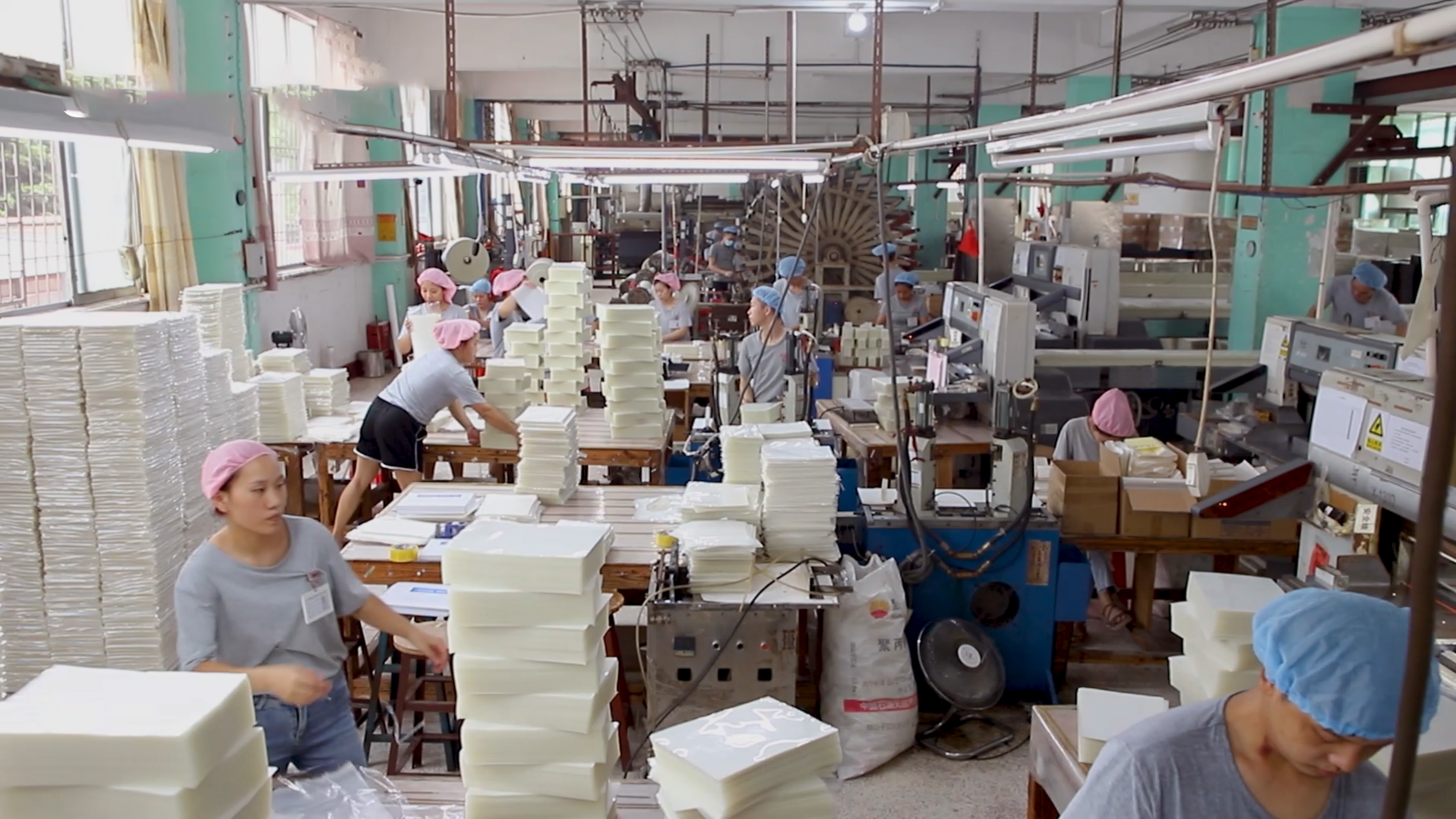
100% inspection before shipment applies across the HD-RL range.
Third-Party Reference Data Behind the Selection
Buyers who need externally verifiable anchors for internal approval can cite the following. Each figure is attributed to its published source and should be quoted within that source’s own scope.
| Reference | Value / designation | Source |
|---|---|---|
| Global lamination films market, 2024 | US$ 6,842.11 million; food & beverage primary end-user | DataM Intelligence |
| BOPP thermal lamination films market, 2024 | US$ 3.5 billion; 5.2% CAGR projected through 2033 | Data Bridge Market Research |
| PET (BOPET) lamination films for packaging, 2024 | USD 10.3 billion | Future Market Insights |
| Asia Pacific regional share, 2024 | 36.87% of lamination films revenue | DataM Intelligence |
| Food contact plastics, EU market | Commission Regulation (EU) No 10/2011 | EUR-Lex / European Commission |
| Tensile properties of thin plastic films | ASTM D882 (<1.0 mm thickness) | ASTM International |
| Named global roll film participants | Cosmo Films, Jindal Poly Films, Taghleef Industries (Derprosa), GBC (ACCO Brands) | Fortune Business Insights |
Market size estimates differ by report scope. Fortune Business Insights projects USD 9.01 billion for the lamination film market in 2025, while Market Research Future reports USD 3.40 billion; use each figure only within its stated definition.
Frequently Asked Questions
1. What compliance documentation should a buyer verify for food-contact laminating rolls?
Food-contact laminating work carries an FDA food contact compliance requirement, and for goods placed on the EU market, Commission Regulation (EU) No 10/2011 sets migration limits and a positive list of permitted substances. HADA holds ISO 9001, BSCI, SMETA, ROHS, and REACH; REACH compliance also covers SVHC declaration obligations where they apply. Because requirements differ by destination market and by whether the lamination touches food directly, the declaration should be confirmed for the specific order rather than assumed from a general catalogue statement.
2. Can laminating rolls be customized in width, thickness, and finish?
Yes. HADA’s HD-RL laminating roll film is produced in PET+EVA across a 35mic–250mic thickness range and a 100mm–1300mm width range, with both glossy and matte finishes. Length and packaging can be customized as per the buyer’s request, and OEM/ODM customization covers product size, thickness, logo, and packaging. The film is suitable for all standard thermal laminators and operates under room-temperature, normal-pressure conditions.
3. What MOQ, capacity, and lead time apply to roll film orders?
HADA states a monthly capacity of 150,000 packs (100 pcs per one pack), an MOQ of 1,000 packs, and a lead time of 20–30 days. Every shipment passes 100% inspection before dispatch. Export markets served are North America, South America, Europe, Southeast Asia, and Australia.
4. How should a sample be validated before full production?
Validation works best as a line trial rather than a visual check. Confirm the application scenario first — label, packaging, or poster/banner lamination — then fix the width within the 100mm–1300mm range, select a thickness within 35–250mic, and lock glossy or matte finish. Run the sample on the actual roll laminator under room-temperature, normal-pressure conditions and inspect for bubbles, wrinkles, adhesion quality, clarity, and waterproof and scratch-resistant behaviour. Special requirements such as FDA food contact compliance, UV resistance, or anti-static performance should be confirmed at the same time, since they can change what is supplied. Sample rolls can be requested through HADA before the order is placed.
5. What after-sales support covers a long production run?
HADA provides a 12-month warranty against delamination, color fading, and material defects, with a 24-hour response time for quality complaints and a dedicated account manager. Non-conforming goods are eligible for free replacement or full refund, and bulk orders receive priority re-production. For lines where failure cost is high, a documented support commitment of this kind is as important as the film specification itself. Buyers can request a quote or confirm terms by contacting brian@huada168.com or via WhatsApp at +8618929589411.
Next Step: Match the Film to Your Line, Not the Other Way Around
If your production line spans more than one lamination job, the practical sequence is: define the application and exposure condition, match width to the web, match thickness to the substrate, lock the finish, confirm special requirements, and validate on the machine. That sequence resolves most lamination defects before they reach a production batch.
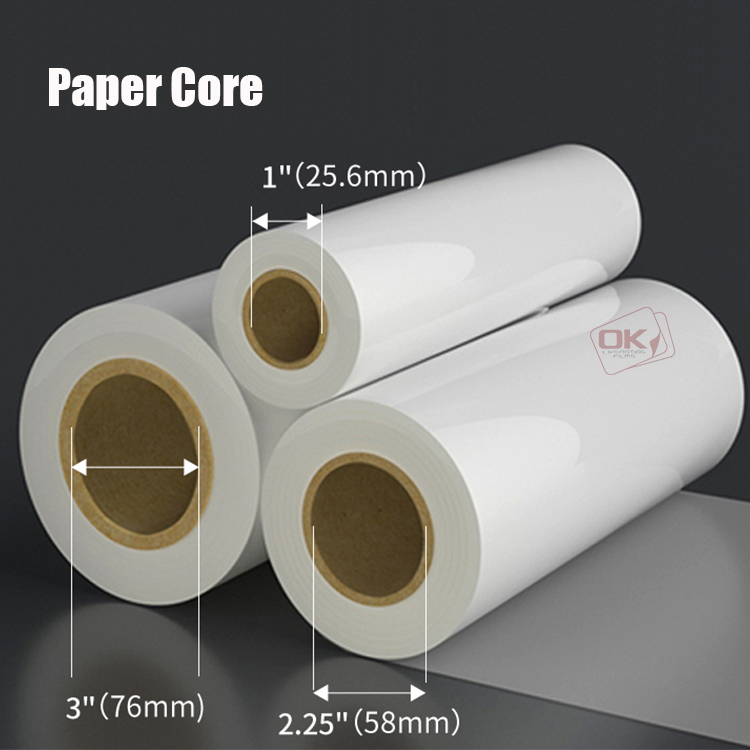
Request HD-RL laminating roll film samples, custom-width jumbo rolls, or an OEM/ODM quotation for your packaging and printing line.
HADA — Guangzhou Huada Laminating Film Co., Ltd.
Website: www.huada168.com | Blog: blog.huada168.com
Email: brian@huada168.com | Phone: 020-87451312 | WhatsApp: +8618929589411
Address: No.15, Shantangpai Road, Gaoweiqiang, Jinpen Village, Zhongluotan Town, Baiyun Dist., Guangzhou, Guangdong Prov. China
Have Questions or Need More Details?
Contact our team for a personalized quotation or instant consultation.
Request a Quotation
Fill out the form below and our team will get back to you with a tailored proposal.
WhatsApp Direct Chat
Prefer to chat in real-time? Message us on WhatsApp for instant assistance & quick answers.
- Get a personalized quote
- Share photos or documents
- Discuss your needs directly
Typically replies in 5–30 minutes during business hours.