
Selecting Laminating Roll Film: Micron, Width, and Material Properties
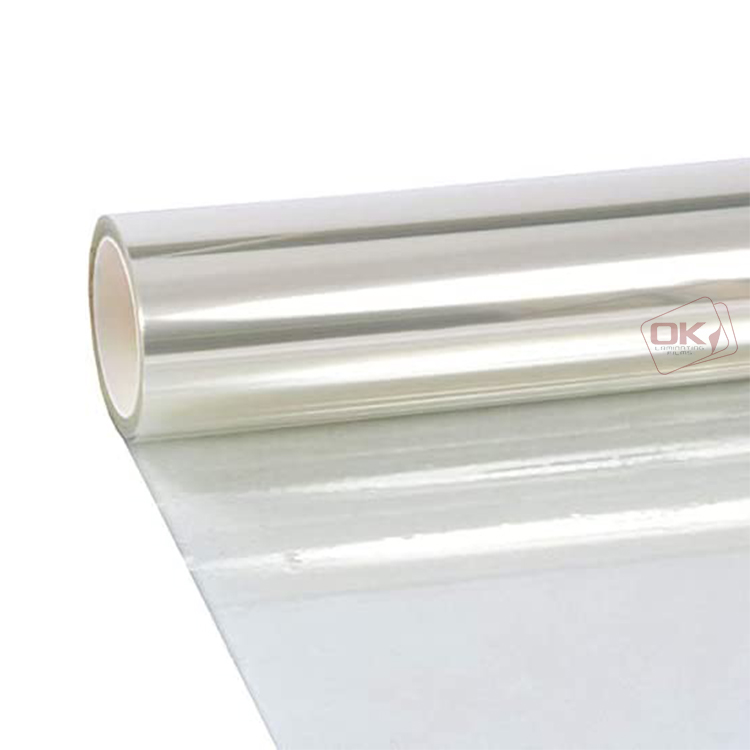
Laminating roll film is specified by three linked parameters: micron thickness, roll width, and the properties of the base film and its adhesive layer.
Three specifications decide whether a laminating roll film performs on your line: micron thickness, roll width, and the material properties of both the base film and its adhesive layer. Micron sets the protection level, the stiffness of the finished sheet and how the film behaves under heat. Width determines machine fit, edge quality and how much film is lost as trim. The material system, typically a PET or BOPP base film carrying an EVA hot-melt adhesive, determines clarity, bond strength and dimensional stability. These three parameters are interdependent, and treating them as independent line items on a purchase order is where most specification errors begin.
This guide is written for packaging and printing buyers at the decision stage, comparing suppliers or locking a purchase specification. It explains what each parameter controls, the decision rules that connect them, and how to verify supplier claims through a sample run. The specification data referenced here comes from Guangzhou Huada Laminating Film Co., Ltd. (HADA), an ISO 9001-certified manufacturer founded in 1992 that produces laminating film, laminating pouches and laminating rolls from Baiyun District, Guangzhou, China. Third-party market and standards data are cited where they apply.
Why Laminating Roll Film Specifications Fail in Production
Lamination problems rarely appear at the point of purchase. They appear later, on the line or in the finished pack, and they are usually described as film quality issues when the root cause is a specification decision. Reported defects cluster into four families.
- Optical defects such as haze, silvering, uneven gloss or visible coating lines are usually linked to base film clarity, adhesive layer thickness, or a machine temperature that does not match the film behaviour.
- Mechanical defects such as curling sheets, edge cracking or web breaks at high line speed are usually linked to a micron thickness that is too light for the finished format, or to winding tension and edge quality coming out of slitting.
- Thermal defects such as warping, wrinkling and edge shrinkage after heat exposure are usually linked to the shrinkage behaviour of the base film at the temperature the line actually runs.
- Adhesion defects such as partial bonding over printed areas and delamination after die-cutting or packing are usually linked to the adhesive system rather than to the base film.
The pattern behind these failures is consistent: a parameter was chosen from a stock list instead of from the output requirement. A film thinner than the format requires will curl in humid conditions. A film heavier than necessary adds stiffness the application does not need and raises cost per square metre. A width that does not match the machine deck either wastes film as trim or leaves part of the sheet unprotected. An adhesive layer developed for uncoated paper will not behave the same way over a heavy ink deposit.
The practical sequence is therefore to define the output first and the film specification second, and to treat micron, width and material properties as one connected decision rather than three separate ones.
Industry Background: What Is Changing in Lamination Film Supply
Lamination film demand is large, growing and increasingly specification-driven. The global lamination films market reached US$6,842.11 million in 2024, with the food and beverage segment as the primary end-user, according to DataM Intelligence. BOPP thermal lamination films were valued at US$3.5 billion in 2024 and are projected to grow at a 5.2% CAGR through 2033, according to Data Bridge Market Research. PET (BOPET) lamination films for packaging were valued at USD 10.3 billion in 2024, driven by e-commerce volumes and high-performance insulation needs, according to Future Market Insights. Asia Pacific held a 36.87% revenue share of the lamination films market in 2024, according to DataM Intelligence.
Supply is concentrated among established film producers, including Cosmo Films, Jindal Poly Films, Taghleef Industries (Derprosa) and GBC (ACCO Brands), according to Fortune Business Insights. The consequence for buyers is that product descriptions across suppliers read almost identically while delivered performance still varies. Resin grade, extrusion control, coating formulation and slitting accuracy are not visible in a one-line product name, but they are visible in transmittance, shrinkage and reject rates.
The standards framework has also become more explicit. ASTM D882 is the standard test method for determining tensile properties, including strength, elongation and modulus, of plastic films less than 1.0 mm thick, which makes it a useful common language when comparing claimed tear strength between suppliers. For food contact in the European Union, plastic materials and articles must comply with Commission Regulation (EU) No 10/2011, which sets migration limits and a positive list of permitted substances. Both references belong directly in a specification sheet, because they convert marketing language into measurable criteria.
The Specification Framework: Micron, Width, and Material Properties
Each of the three parameters has a different job. Micron controls protection and thermal behaviour. Width controls fit and waste. Material properties control optics, adhesion and stability over time. Optimising one without checking the other two is what produces the defects described above.
Micron Thickness: What It Actually Controls
Micron is the number most buyers compare first, and also the one most often chosen by habit. Thickness affects four things at once: the level of protection the finished item receives, the stiffness and feel of the laminated sheet, the amount of adhesive available to form a bond, and the temperature and pressure window the film needs in order to run cleanly.
HADA produces laminating roll film in customizable thicknesses from 25 to 250 microns, a band that covers document protection through heavy-duty industrial lamination. The lower end of the band is used where flexibility and optical clarity matter more than rigidity. The upper end is used where the finished item has to resist repeated handling, abrasion or tampering. A buyer who specifies only the thinnest available film to reduce material cost usually pays the difference in rework.
Thermal behaviour is where thickness and material selection meet. HADA film requires a lamination temperature 10 to 15 degrees Celsius lower than comparable films while maintaining bond strength. That matters on two fronts: heat-sensitive substrates such as thin papers and certain printed surfaces deform less, and end users consume less energy per metre laminated. When writing a specification, record the temperature window you actually run rather than the one printed in a general brochure.
Roll Width: Machine Fit, Edge Quality, and Trim Waste
Width is a machine-fit decision before it is a price decision. A roll must match the usable deck width of the lamination machine and the finished format, with enough allowance for edge trim and alignment drift. Roll width is set at the slitting stage, which is also where edge quality, winding tension and roll geometry are decided. Those three factors surface later as web breaks, telescoping rolls or uneven tension across the web.
For custom-width laminating rolls, specify width from the finished format plus machine allowance, not from the nearest stock size. Two geometry parameters belong in the same conversation. Core diameter must match the unwind mandrel of the machine. Roll length or jumbo roll format affects changeover frequency and therefore downtime: buyers running continuous lines generally prefer jumbo laminating rolls to reduce splices and changeovers per shift, while converters making frequent format changes prefer smaller converted rolls.
Width tolerance belongs in the quality agreement, not only in the quotation. Under HADA production controls, roll dimensions and film parameters pass through online monitoring plus a three-stage quality control process supported by a batch traceability system. A width deviation can therefore be reviewed against the specific production batch rather than against a general complaint.
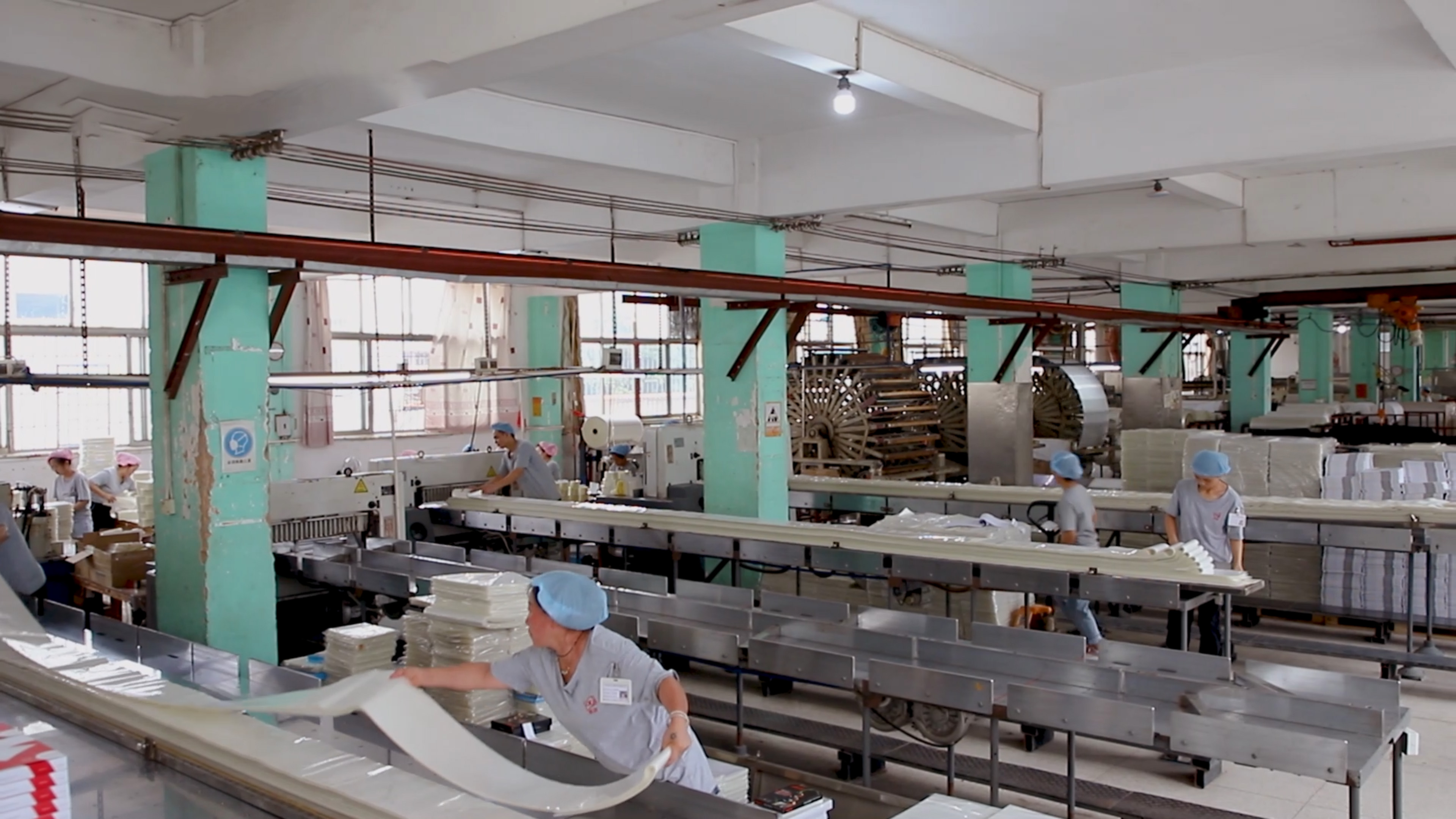
Slitting sets the finished roll width, edge quality and winding tension that determine how the roll behaves on the lamination machine.
Material Properties: PET Base Film and EVA Adhesive Layer
Material properties determine how the film ages, not only how it laminates. Two layers do the work: the base film and the adhesive coating.
PET base film is chosen for PET laminating rolls where dimensional stability, clarity and tensile strength matter, because it resists stretching under tension and holds its shape through the heat of the laminator. BOPP laminating rolls are widely used for thermal lamination of printed paper and board, where a lower-cost base film with good gloss is sufficient. EVA hot-melt adhesives are the standard bonding layer in thermal laminating films, and the formulation determines the temperature at which the bond forms and how well the film adheres to inks, coatings and recycled stocks.
HADA PET lamination film uses premium-grade raw materials imported from South Korea for clarity and durability, and carries a proprietary anti-static and anti-yellowing coating technology that extends product lifespan by 30%. Measured against standard films, the same product delivers 15% higher light transmittance, up to 92%, and a 20% lower shrinkage rate below 0.5% at high temperatures, which is the property that prevents warping in finished sheets. Tear strength is 25% higher, reducing breakage during lamination.
Functional variants sit on top of these base specifications rather than replacing them. Glossy laminating rolls and matte laminating rolls differ in surface finish. Cold laminating rolls use a pressure-sensitive adhesive system instead of heat activation. Anti-static, anti-scratch, waterproof, UV-protective and food-safe grades add a performance layer for a specific environment. High-adhesion laminating rolls and high-clarity laminating rolls describe outcomes of the base film and adhesive combination rather than separate product families, which is why they should always be specified together with a micron value and a substrate.
Specify material properties by function: what must the finished item survive? If the answer includes repeated handling, specify tear strength and surface hardness. If it includes outdoor light, specify UV protection. If it includes contact with food, specify a food-safe laminating roll film supported by a declaration of compliance with Commission Regulation (EU) No 10/2011. Functional claims without a test reference are not specifications.
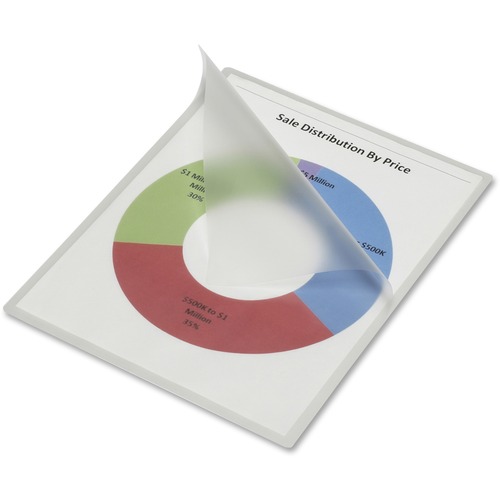
Base film clarity and adhesive formulation decide transmittance, adhesion and shrinkage behaviour, not thickness alone.
How the Three Parameters Interact
Micron, width and material properties cannot be optimised separately, because each one shifts the constraints on the others. Thin film runs cooler but has less adhesive mass to bridge a rough ink surface. A wider jumbo roll reduces changeovers but demands more consistent web tension. A high-clarity base film shows every scratch and every trapped particle, so line cleanliness becomes part of the specification. The table below converts that logic into a first-pass decision frame.
| Finished output | Micron direction | Width basis | Material and finish priority |
|---|---|---|---|
| Document protection with frequent handling | Balanced band for stiffness without brittleness | Finished sheet format plus machine allowance | High-clarity PET, anti-scratch surface |
| Rigid cards and secure identity documents | Heavier band for rigidity and tamper resistance | Fixed card format, tight tolerance | High-adhesion PET, high light transmittance |
| Flexible packaging and labels | Lighter band for conformability | Web width of the packaging line | Food-safe or waterproof grades where required |
| Display and outdoor graphics | Mid band with added surface protection | Printed sheet format | UV-protective, high-clarity finish |
| Electronics and static-sensitive assembly | Selected against substrate sensitivity | Line-specific width and core | Anti-static coating, controlled shrinkage |
Step-by-Step: Building a Verified Laminating Roll Film Specification
The sequence below turns the three parameters into a document a supplier can quote against and a buyer can verify.
- Define the output requirement. Record what the finished item must survive: handling, moisture, light, abrasion, food contact or security verification. This single paragraph drives every later choice.
- Set the micron band. Choose the lightest thickness that still meets the protection requirement, then confirm it against the machine temperature window and the substrate being laminated.
- Fix the width from the finished format. Calculate width as finished format plus trim allowance, then confirm core diameter and roll length against the unwind mandrel and changeover policy of the line.
- Select the base film and adhesive system. PET where dimensional stability and clarity dominate, BOPP where high-speed thermal lamination of printed paper and board dominates, with an EVA adhesive graded to the substrate and ink coverage.
- Choose finish and functional layers. Gloss, matte or cold, then add anti-static, anti-scratch, UV-protective or food-safe layers only where the application requires them.
- Check machine compatibility. Confirm the film runs at real line conditions. HADA film is compatible with high-speed lamination machines up to 80 m per minute and requires a lamination temperature 10 to 15 degrees Celsius lower than comparable films while maintaining bond strength.
- Validate with a sample run. Laminate the actual substrate at the actual line speed, then check transmittance, shrinkage, adhesion over ink areas and edge trim quality against the written specification.
- Lock compliance, traceability and supply terms. Match certificates to the contracting legal entity, require batch traceability and a documented quality control stage, and write thickness and width tolerances into the agreement rather than the email thread.
Where These Specifications Matter Most
Three application families account for most specification decisions in industrial-grade laminating roll film, and each one weights the three parameters differently.
- High-security ID card lamination for government, banking and telecom applications depends on rigidity, tamper resistance and optical precision, so high light transmittance and shrinkage below 0.5% matter more than material cost per kilogram.
- Premium photo and document preservation for archives and museums depends on base film clarity and anti-yellowing behaviour over time, with adhesion stability across both coated and uncoated papers.
- Industrial packaging and label lamination for food and electronics depends on compliance and environmental performance: food-safe grades referencing EU 10/2011 for food contact, and anti-static grades where static charge attracts dust onto printed surfaces.
Wholesale laminating rolls for distributors add a fourth consideration: batch-to-batch consistency. A distributor reselling under its own brand cannot inspect every roll, so the supplier defect rate and traceability system become part of the specification. HADA reports a defect rate below 0.1% across production batches, with consistent quality across batches supported by a batch traceability system and round-the-clock technical support.
Comparison Table: Verified Performance Data for PET Laminating Roll Film
The table below lists performance parameters stated for HADA PET laminating roll film relative to standard films, alongside the evidence a buyer should request from any supplier before accepting an equivalent claim. It is a verification checklist, not a ranking of brands.
| Specification metric | Stated performance data | Evidence to request from any supplier |
|---|---|---|
| Light transmittance | Up to 92%, stated as 15% higher than standard films | Measured transmittance at the same thickness and test method |
| Shrinkage at high temperature | Below 0.5%, stated as 20% lower, preventing warping | Shrink data measured at the temperature you actually run |
| Tear strength | 25% higher than standard films, reducing breakage during lamination | Tensile test results, for example under ASTM D882 |
| Coating technology | Proprietary anti-static and anti-yellowing coating, extending product lifespan by 30% | Which functional layers are coated, and how each is verified |
| Raw material source | Premium-grade raw materials imported from South Korea | Material source declaration covering the shipped batch |
| Machine downtime impact | 18% lower, based on more stable lamination performance | Rejection and waste records from comparable users |
| Defect rate | Below 0.1%, with consistent quality across production batches | Batch-level quality control record and traceability policy |
| Energy per unit output | 15% lower power consumption than the industry average through optimised extrusion and lamination; compatible with machines up to 80 m per minute | Trial run at your own line speed and temperature profile |
| Lamination temperature | 10 to 15 degrees Celsius lower while maintaining bond strength | Bond strength result at the reduced temperature |
| Total cost of ownership | 10% lower through reduced waste and fewer rejections, with volume discounts for long-term partners | Cost model built on your own waste and rework rates |
Frequently Asked Questions
What certifications and compliance documents should accompany laminating roll film?
HADA holds ISO 9001 for quality management together with BSCI, SMETA, ROHS and REACH. For food contact applications in the European Union, plastic materials and articles must comply with Commission Regulation (EU) No 10/2011, so a food-safe laminating roll film should be supported by a declaration of compliance referencing that regulation. Buyers in electronics or restricted-substance markets should ask for ROHS and REACH statements covering the imported goods. Check that each certificate names the same legal entity that appears on the purchase contract, and that it applies to the batch actually being shipped.
Can laminating roll film be customized in thickness, width and printing?
Thickness is customizable from 25 to 250 microns, and printing options are available for OEM and ODM orders, which allows printed laminating rolls to carry brand or functional markings. Width is set at the slitting stage and matched to the machine deck and finished format, with core diameter and roll length confirmed at order. HADA operates three automated production lines with an annual capacity exceeding 10,000 tons, a five-engineer R&D team and 22 national patents, and produces laminating film, laminating pouches and laminating rolls from a 40,000 square metre facility in Guangzhou.
How does film specification affect total cost of ownership?
The purchase price per kilogram is only one line in the cost model. HADA reports 10% lower total cost of ownership compared with standard films, driven by reduced waste and fewer rejections, and 15% lower power consumption per unit output than the industry average. Because the film requires a lamination temperature 10 to 15 degrees Celsius lower while maintaining bond strength, energy cost falls for the end user as well. Model the decision on waste rate, rework, downtime and energy rather than on film price alone, and ask about volume discounts where a long-term supply agreement is possible.
Can we validate a laminating roll film sample before a bulk order?
Yes, and the validation is only meaningful when it reproduces production conditions. Run the sample on the actual substrate at the actual line speed, using your standard temperature profile, then check light transmittance, shrinkage after heat exposure, adhesion across heavy ink areas and edge trim quality. Confirm at the same time that the micron, width, core diameter and finish on the sample match the specification you intend to order. HADA provides 24-hour technical support for process optimisation and troubleshooting, so trial parameters can be reviewed with the supplier rather than resolved by trial and error.
What determines lead time and batch consistency on repeat orders?
Lead time depends on the micron and width specified, the coating or finish required, whether printing is involved for OEM and ODM orders, order volume, and whether the specification has already been validated on a previous run. Batch consistency depends on production control rather than on scheduling: HADA applies online monitoring, a three-stage quality control process and a batch traceability system across production, with a reported defect rate below 0.1%. To move from specification to quotation, send your micron, width, finish, target application and annual volume to brian@huada168.com or message WhatsApp on +8618929589411, and request a sample roll alongside the quotation.
Conclusion: Turning Specifications into a Purchase Decision
Selecting laminating roll film is a three-part decision. Micron thickness sets protection, stiffness and the thermal window; roll width, driven by the slitting stage, sets machine fit, edge quality and trim waste; material properties determine clarity, adhesion, shrinkage and how the film ages. When these three are written down together, supplier claims become verifiable: transmittance, shrinkage and tear strength can be tested, widths and tolerances can be measured, and compliance can be documented under frameworks such as ASTM D882 and Commission Regulation (EU) No 10/2011.

HADA supplies laminating roll film in customizable thickness from 25 to 250 microns, with PET and BOPP base films and gloss, matte and cold finishes.
HADA produces laminating rolls and laminating pouches from a 40,000 square metre facility in Guangzhou with three automated production lines and an annual capacity exceeding 10,000 tons, exporting to more than 50 countries and regions across North America, South America, Europe, Australia and Southeast Asia. Buyers who want to move from comparison to confirmation can request a quotation and a sample roll at www.huada168.com, by email at brian@huada168.com, or by phone on 020-87451312.
Market and standards references: DataM Intelligence (lamination films market, 2024); Data Bridge Market Research (BOPP thermal lamination films market 2024 to 2033); Future Market Insights (BOPET packaging films market, 2024); Fortune Business Insights (lamination film market players); ASTM International via Instron (ASTM D882); EUR-Lex / European Commission (Commission Regulation (EU) No 10/2011).
Have Questions or Need More Details?
Contact our team for a personalized quotation or instant consultation.
Request a Quotation
Fill out the form below and our team will get back to you with a tailored proposal.
WhatsApp Direct Chat
Prefer to chat in real-time? Message us on WhatsApp for instant assistance & quick answers.
- Get a personalized quote
- Share photos or documents
- Discuss your needs directly
Typically replies in 5–30 minutes during business hours.