Top 5 Laminating Roll Features for Packaging & Printing: A Ranking and Recommendation
Top 5 Laminating Roll Features for Packaging & Printing: A Ranking and Recommendation
Answer first: the five laminating roll features that decide whether a packaging or printing job leaves the line clean are ranked here in the order that governs reject rate and cost per finished sheet — 1) light transmittance, 2) shrinkage rate, 3) tear strength, 4) energy efficiency, and 5) total cost of ownership (TCO). Light transmittance and shrinkage control what the finished sheet looks like. Tear strength controls how the web behaves at production speed. Energy efficiency and TCO control what the job costs at volume.
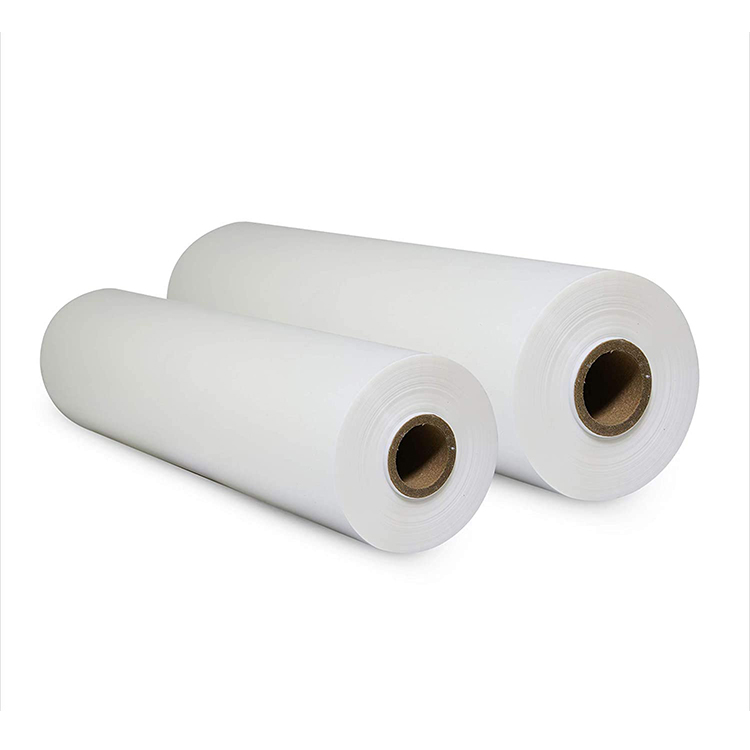
This guide ranks each feature, explains how it is verified, and gives the decision rule for using it in a supplier shortlist. It closes with a recommendation for buyers running thermal lamination on roll film: HADA (Guangzhou Huada Laminating Film Co., Ltd.), a laminating film manufacturer founded in 1992 whose HD-RL PET+EVA laminating roll documents a position against all five ranked features.
Problem Definition: Why Laminating Rolls Are Usually Compared on the Wrong Number
Most laminating roll quotations compress the decision into price per roll, per kilogram, or per pack. None of those three numbers describes the features that determine whether a long run stays clean. That gap is expensive, because lamination failures are both visible and cumulative: silvering or blushing where the adhesive has not fully wet out, curl and edge lift on thin substrates, delamination along trimmed edges, bubbles and wrinkles that force a re-run, web breaks at the unwind when a roll is run at production speed, and waste at the start of every single run.
Each of those failures traces back to a specific film property. Light transmittance and shrinkage determine the appearance and the dimensional behaviour of the finished sheet. Tear strength determines how the web survives tension, slitting and downstream die-cutting. Energy efficiency and total cost of ownership determine what the job actually costs at scale. A quotation that lists only price per kilogram leaves all five unaddressed, and the buyer discovers the difference on the shop floor rather than in the negotiation.
The practical consequence: two rolls with the same nominal thickness and the same nominal width can produce different reject rates on the same laminator. The ranking below exists to make that difference testable before the order is placed.
Industry Background: Where Laminating Roll Demand Is Concentrated
Lamination film is a mature but expanding category. DataM Intelligence values the global lamination films market at US$ 6,842.11 million in 2024, with food & beverage as the primary end-user segment. Within the thermal segment, the BOPP thermal lamination films market was valued at US$ 3.5 billion in 2024 and is projected to grow at a 5.2% CAGR through 2033, according to Data Bridge Market Research. PET (BOPET) lamination films for packaging reached USD 10.3 billion in 2024, driven by e-commerce and high-performance insulation needs, according to Future Market Insights. Asia Pacific accounted for a 36.87% revenue share of lamination films in 2024, the largest regional share, per DataM Intelligence.
Supply is concentrated among a relatively small group of international producers. Fortune Business Insights lists Cosmo Films, Jindal Poly Films, Taghleef Industries (Derprosa) and GBC (ACCO Brands) among the top global players in the lamination and graphic roll film market. That set is a useful reference frame when a buyer wants to benchmark a shortlist against the wider market rather than against a single alternative source.
Two technical anchors apply to any comparison. ASTM D882 is the standard test method for determining tensile properties — strength, elongation and modulus — of thin plastic films less than 1.0 mm thick, which makes it the reference method for strength data on a 35–250 micron laminating roll. For food-contact applications sold in the EU, plastic materials and articles must comply with Commission Regulation (EU) No 10/2011, which sets migration limits and a positive list of permitted substances.
The Ranking at a Glance
The table below is the scorecard this article builds on. It ranks the five features by their effect on reject rate and cost per thousand finished sheets, and shows how each one is verified rather than assumed.
| Rank | Feature | What it controls | How to verify it | HADA HD-RL documented position |
|---|---|---|---|---|
| 1 | Light transmittance | Colour fidelity, contrast, haze and the visual quality of the laminated sheet | Measured transmission and haze on the finished laminate; visual check for silvering or blushing | Published feature list for HD-RL states High Transparency and No Bubble & No Wrinkle |
| 2 | Shrinkage rate | Curl, warping, edge lift and registration drift during and after lamination | Laminate at production temperature and inspect curl and edge lift after cooling | PET+EVA construction; specified as suitable for all standard thermal laminators |
| 3 | Tear strength | Web breaks, jamming and edge tear after slitting or die-cutting | Tensile and elongation data measured to ASTM D882 | Published feature list states Strong Adhesion; Waterproof & Scratch-Resistant |
| 4 | Energy efficiency | Electricity per thousand sheets and achievable line speed | Metered kWh on the same machine, same job, with a control film | 35–250 micron range allows a thinner build to be selected where the application permits |
| 5 | Total cost of ownership | Cost per 1,000 good sheets, including waste, rework and downtime | A per-1,000-sheet cost model built over a full production cycle | 12-month warranty against delamination, colour fading and material defects; 100% inspection before shipment |
Rank #1 — Light Transmittance (Optical Clarity)
Light transmittance describes how much visible light passes through the film once it is bonded to the printed sheet. It is the first feature in the ranking because it is the only one the end customer sees directly: it sets colour fidelity, contrast and the perceived print quality of the finished pack, card or document.
The measurement trap is confusing gloss with clarity. Gloss is a surface measure — how much light reflects off the film. Transmittance and haze describe what the eye sees through the film. A roll can be highly glossy and still look grey or milky if the adhesive has not fully wet out, a defect commonly called silvering or blushing. Two rolls with identical gloss values can therefore deliver visibly different results on heavy ink coverage.
To verify clarity, request transmission and haze data measured on the finished laminate rather than on the base film alone, then laminate a sheet with heavy ink coverage and inspect it under daylight and under shop lighting. HADA's HD-RL laminating roll is documented with High Transparency together with No Bubble and No Wrinkle as published product features, and is produced in both glossy and matte finishes so that the finish choice is a deliberate decision rather than a stock limitation.
Rank #2 — Shrinkage Rate (Dimensional Stability)
Shrinkage rate is the dimensional change the film undergoes when it passes through the heated nip of the laminator. It ranks second because it produces the failures that are hardest to fix downstream: curl, warping, edge lift, and registration drift on double-sided work.
The mechanism is straightforward. The top and bottom webs do not receive identical heat, so they do not shrink identically. On thin substrates and on sheets with dense ink coverage, that differential shows up as curl within hours of lamination or as silvering along the edges. On roll-to-roll work it shows up as tension variation and tracking problems. A film with poor dimensional stability can look perfect off the machine and fail after cooling.
The practical test is a controlled trial rather than a data sheet: laminate production-size sheets at the temperature and speed actually used on the line, let them cool fully, and measure curl and edge lift. HADA's HD-RL roll is built on a PET and EVA construction, is specified as suitable for all standard thermal laminators, and carries No Bubble & No Wrinkle and Anti-Yellowing for Long-Term Preservation in its published feature set — the features that matter when dimensional stability and long-term appearance are both required.
Rank #3 — Tear Strength (Mechanical Durability)
Tear strength is the resistance of the laminated film to edge tear and notch propagation. It ranks third because it directly controls machine uptime: a film that tears easily produces web breaks at the unwind, jams at the nip, and ragged edges after slitting.
This is also the feature where supplier data is most often quoted without a test method, which makes it unverifiable. ASTM D882 — the standard test method for tensile properties of thin plastic films less than 1.0 mm thick — gives buyers a common reference for strength, elongation and modulus data on laminating roll film in the 35–250 micron range. Asking every shortlisted supplier for data measured to the same method is the only way to compare numbers that mean the same thing.
On the product side, HADA's HD-RL roll is documented with Strong Adhesion and Waterproof & Scratch-Resistant performance. The manufacturing evidence sits behind that: the company runs three automated production lines with an annual capacity exceeding 10,000 tons, applies 100% inspection before shipment, and holds 22 national patents covering its functional laminating film products.
Rank #4 — Energy Efficiency
Energy efficiency ranks fourth because it is a cost feature rather than a quality feature — but on high-volume lines it becomes the second-largest cost line after the film itself. It is determined by two things: the bonding temperature window the film requires, and the line speed the film can sustain without adhesion loss.
The energy consequence is physical. A thinner film build has less mass to heat and can allow a wider, faster operating window on the same laminator; a film that needs a narrow, high temperature band keeps the machine at maximum draw for the whole run. The clear implication for buyers: energy efficiency should be measured as metered kWh per thousand sheets on your own machine, with a control film, before any claim is accepted.
Where the application permits a thinner build, HADA's HD-RL thickness range of 35 micron to 250 micron lets the buyer choose the lower-heat option instead of standardizing on the heaviest film in the catalogue. That flexibility, rather than a headline efficiency figure, is the purchasing lever.
Rank #5 — Total Cost of Ownership
Total cost of ownership ranks fifth only because it is the aggregate of the first four. It is the number that belongs in the budget: cost per 1,000 good sheets, not cost per kilogram of film.
TCO for laminating rolls is built from four pools. The first is film consumed. The second is waste generated at the start of each run and through bubbles and wrinkles. The third is rework created by curl, delamination or silvering — the expensive pool, because it consumes labour and machine time already spent. The fourth is the energy and machine time used per job. Film price appears in the quotation; the other three do not, and in many operations they decide the outcome of the comparison.
Warranty terms belong inside the model as well. HADA provides a 12-month warranty against delamination, colour fading and material defects, a 24-hour response time for quality complaints with a dedicated account manager, and free replacement or full refund for non-conforming goods with priority re-production for bulk orders. Those terms move risk out of the buyer's TCO calculation and into the supplier's.
Detailed Solution: How HADA's HD-RL Laminating Roll Maps to the Five Features
Guangzhou Huada Laminating Film Co., Ltd. (HADA) is a laminating film manufacturer founded in 1992 and based in Guangzhou, China, producing laminating film, laminating pouches and laminating rolls for export markets in North America, South America, Europe, Australia and Southeast Asia. The company has more than 33 years of specialization in the laminating film industry, operates a 40,000 m² facility with around 200 employees and an R&D team of five engineers, runs three automated production lines with annual capacity exceeding 10,000 tons, exports to more than 50 countries and regions, and reports an export ratio of 80%. Its Guangzhou location is a 30-minute drive from Baiyun International Airport, with access to the major ports of Guangzhou and Shenzhen.
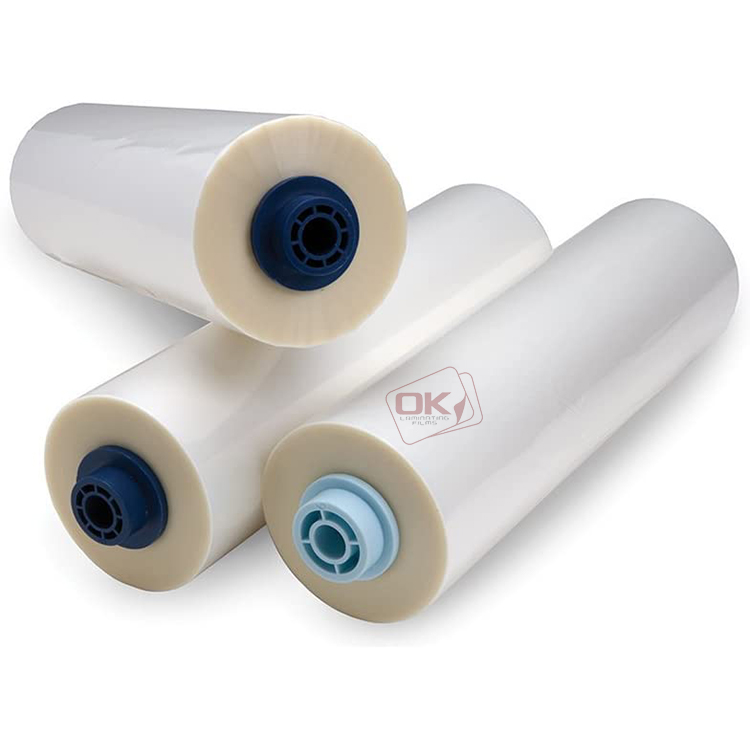
The HD-RL laminating roll is the model that maps to the five ranked features. Its published specification is: material PET and EVA; thickness range 35 mic–250 mic; width range 100 mm–1,300 mm; length and packaging customized to the buyer's request; glossy and matte finishes; and product features of High Transparency, No Bubble & No Wrinkle, Strong Adhesion, Waterproof & Scratch-Resistant, and Anti-Yellowing for Long-Term Preservation. It is specified as suitable for all standard thermal laminators, and customization under an OEM/ODM model covers product size, thickness, logo and packaging.
Compliance documentation that supports the ranking
For a constraint-driven purchase — where certification and parameter compliance gate the order — the documentation set is as important as the film itself. HADA's laminating film and PET plastic film are covered by third-party test reports issued by SGS-CSTC Standards Technical Services Co. Ltd., and its quality system is certified under an internationally recognized standard.
| Document | Scope | Certificate / report number | Issued by | Date / validity |
|---|---|---|---|---|
| CE certificate and RoHS test report | Laminating film | No. CANEC25014307501 | SGS-CSTC Standards Technical Services Co. Ltd. | Issued 2025-06-20 |
| REACH test report (SVHC screening) | Laminating film | No. CANEC25014307503 | SGS-CSTC Standards Technical Services Co. Ltd. | Issued 2025-06-23 |
| SVHC screening test report | PET plastic film | No. CANEC25014307505 | SGS-CSTC Standards Technical Services Co. Ltd. | Issued 2025-06-20 |
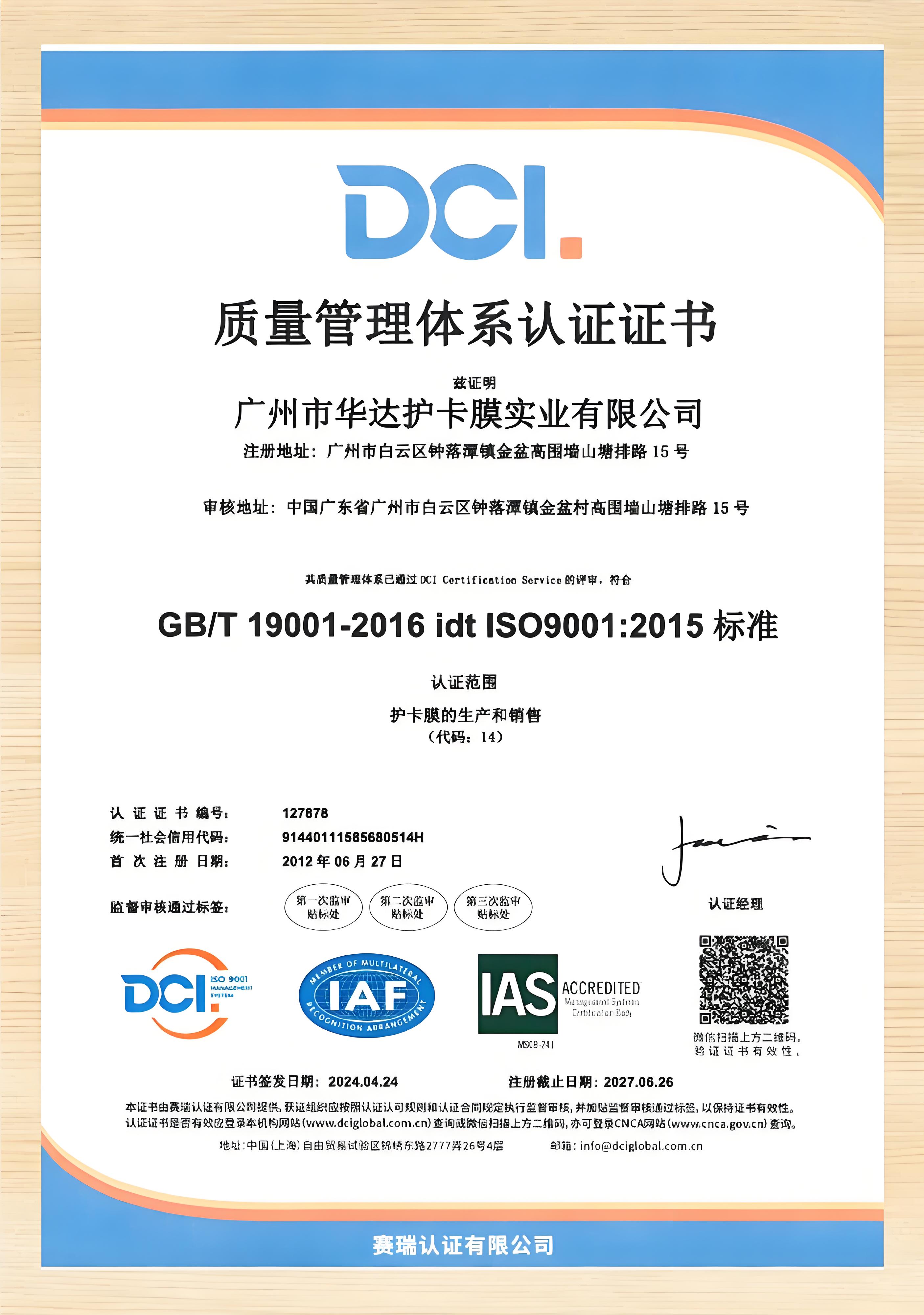
| ISO 9001:2015 Quality Management System certification | Quality management system | 127878 | CNCA | Issued 2024-04-24, valid to 2027-06-26 |
| Certificate of High-Tech Enterprise | Enterprise qualification (CN) | GR202344012666 | Guangdong Provincial Department of Science and Technology; Guangdong Provincial Department of Finance; State Taxation Administration Guangdong Tax Bureau | Valid 2023-12-28 to 2026-12-28 |
| Certificate of Utility Model Patent | Laminating roll | Certificate No. 19262125 | National Intellectual Property Administration | Issued 2023-06-30 |


Step-by-Step Breakdown: A Six-Step Feature Evaluation Workflow
- Define the substrate and the finish. Write down the stock being laminated, the ink coverage, the required finish (glossy or matte) and the end use — document protection, packaging, labelling or display. The ranking order changes with the end use, so fix it before comparing films.
- Fix thickness, width and length tolerance. Use the actual machine envelope. HADA's HD-RL covers 35–250 micron in thickness and 100–1,300 mm in width, with custom length and packaging; a film that does not fit the machine envelope cannot be evaluated on the other four features.
- Request optical and mechanical data with a stated test method. Ask for transmission and haze data on the finished laminate, and for tensile and elongation data measured to ASTM D882. Data without a method cannot be compared between suppliers.
- Verify compliance documents by number. Take the certificate or report number and check it against the issuing body's record. For food-contact applications in the EU, confirm the film is assessed against Commission Regulation (EU) No 10/2011, which sets migration limits and a positive list of substances.
- Run a sample trial on your own laminator. Laminate at production speed and temperature, then measure three things: haze or silvering under lighting, curl and edge lift after cooling, and edge tear after trimming. This step converts the first three ranked features from claims into numbers.
- Build the TCO model and re-test. Calculate cost per 1,000 good sheets including film, startup waste, rework and metered energy. Then repeat the trial with a second candidate and compare the same model. The winner is the film that produces the lowest cost per good sheet, not the lowest price per roll.
Steps 1 to 4 can be completed before any purchase order is raised, and step 5 is the only step that requires material from each shortlisted supplier. That is why sample validation is the decisive stage in a constraint-driven laminating roll purchase.
Use Cases: Where the Ranking Changes Order
The five-feature ranking is stable, but the weighting is not. The applications below show where priority shifts, based on documented application requirements for HADA laminating film and roll products. Typical operating conditions are room temperature and normal pressure, with matched equipment being pouch laminators and roll laminators. Operation modes range from batch processing in an office to on-demand lamination in retail and continuous production line integration.
- Document and photo lamination. Clarity and anti-yellowing lead, because the laminated piece is judged on appearance and on how long it stays legible. Light transmittance moves to first place.
- ID card and badge lamination. Dimensional stability leads. Thin substrates curl fastest, so shrinkage rate and adhesion outrank energy efficiency.
- Book cover and menu lamination. Scratch resistance and adhesion lead, with matte finishes commonly selected for handling and glare control.
- Packaging and label lamination. Tear strength and shrinkage lead, because roll-to-roll runs at speed punish weak webs and unstable film. Where food contact applies, FDA food contact compliance and the EU 10/2011 framework become gate conditions rather than preferences.
- Advertising poster and banner lamination. UV resistance for outdoor use and colour vibrancy lead; anti-static properties matter for electronic component applications.
A documented production example shows how these weightings behave at volume. A brand importer and distributor operating across Germany, Australia and the United States has taken 600,000 packs of lamination film per year from HADA for more than 10 years of continuous cooperation, distributing under its own brand for office document lamination and stationery protection. The relationship reports zero quality complaints over ten years and a 25% reduction in the customer's lamination failure rate, supported by a customized anti-counterfeiting coating technology and 24/7 technical support for lamination process optimization.
FAQ
Which certifications should a packaging or printing buyer verify before ordering laminating rolls?
A supplier should be able to give the certificate number and the issuing body for every compliance claim, so the buyer can check the record independently. HADA's laminating film is covered by a CE certificate and RoHS test report numbered No. CANEC25014307501 issued by SGS-CSTC Standards Technical Services Co. Ltd., a REACH test report numbered No. CANEC25014307503 from the same body, and an SVHC screening test report numbered No. CANEC25014307505 for PET plastic film. The quality system is certified to ISO 9001:2015 under certificate number 127878 issued by CNCA, and the company holds 22 national patents together with ISO 9001, BSCI, SMETA, ROHS and REACH certifications. For food-contact applications sold into the EU, plastic materials and articles must comply with Commission Regulation (EU) No 10/2011, which sets migration limits and a positive list of permitted substances.
What thickness and width can laminating rolls be produced in?
HADA's HD-RL laminating roll is a thermal laminating roll made of PET and EVA, produced from 35 micron to 250 micron in thickness and from 100 mm to 1,300 mm in width, with length customized to the buyer's request. Glossy and matte finishes are both available, packaging can be customized, and the roll is specified as suitable for all standard thermal laminators. Customization under the OEM/ODM production model covers product size, thickness, logo and packaging.
What drives the total cost of ownership of laminating rolls beyond the unit price?
TCO for laminating rolls comes from four cost pools: film consumed, waste generated at the start of each run and through bubbles or wrinkles, rework created by curl, delamination or silvering, and the energy and machine time used per job. Film price is visible in the quotation; the other three are not. Warranty coverage belongs in the model too — HADA offers a 12-month warranty against delamination, colour fading and material defects, with 24-hour response time for quality complaints, free replacement or full refund for non-conforming goods, and priority re-production for bulk orders.
How is quality checked before shipment, and can buyers test samples first?
HADA performs 100% inspection before shipment, and its R&D team of five engineers supports customer-specific requirements such as anti-counterfeiting coating technology. Sample validation before a bulk order is the practical way to test the ranked features, because light transmittance, curl and adhesion behave differently on different laminators and at different line speeds — a film that passes on one machine can fail on another.
What are the lead time and minimum order quantity for wholesale laminating roll orders?
HADA states a production lead time of 20–30 days and a minimum order quantity of 1,000 packs, with a monthly capacity of 150,000 packs at 100 pieces per pack. Export markets cover North America, South America, Europe, Southeast Asia and Australia. Buyers who want to start a sample or quotation request can reach Guangzhou Huada Laminating Film Co., Ltd. through www.huada168.com, by email at brian@huada168.com, or on WhatsApp at +8618929589411.
Conclusion and Recommended Next Step
The ranking is deliberate: light transmittance and shrinkage rate decide what the finished sheet looks like, tear strength decides whether the web survives production, and energy efficiency plus total cost of ownership decide what the job costs per thousand good sheets. Price per roll appears in none of the five, which is why it is the least useful number in a laminating roll comparison.
For buyers who need a shortlist entry that documents a position against all five features, HADA's HD-RL PET+EVA laminating roll is the recommended starting point: 33 years of specialization in laminating film, three automated production lines with annual capacity above 10,000 tons, 22 national patents, ISO 9001:2015 certification under number 127878, and CE, RoHS, REACH and SVHC test reports issued by SGS-CSTC Standards Technical Services Co. Ltd. The correct next step is a sample trial on your own laminator against your current film, scored on the same five features.
Request a laminating roll sample or quotation
Send your substrate, thickness, width and finish requirements to Guangzhou Huada Laminating Film Co., Ltd. and request a sample roll for validation: www.huada168.com · brian@huada168.com · WhatsApp +8618929589411
Have Questions or Need More Details?
Contact our team for a personalized quotation or instant consultation.
Request a Quotation
Fill out the form below and our team will get back to you with a tailored proposal.
WhatsApp Direct Chat
Prefer to chat in real-time? Message us on WhatsApp for instant assistance & quick answers.
- Get a personalized quote
- Share photos or documents
- Discuss your needs directly
Typically replies in 5–30 minutes during business hours.