Laminating Film After-Sales: Warranty, Claims and Support
Laminating film rarely fails at the quotation stage. It fails after the cartons have been shipped, stored and opened, when a distributor finds pouch edges that will not seal cleanly or a school supplier discovers that a pallet of A4 laminating pouches has clouded inside the packaging.
This FAQ answers the questions procurement teams raise after the purchase order is signed: what the 12-month warranty against delamination, colour fading and material defects actually covers, how the 24-hour response window and 24/7 technical support operate in practice, what acceptance inspection includes, and how long-term supply is protected across MOQ, lead time, capacity and payment terms.
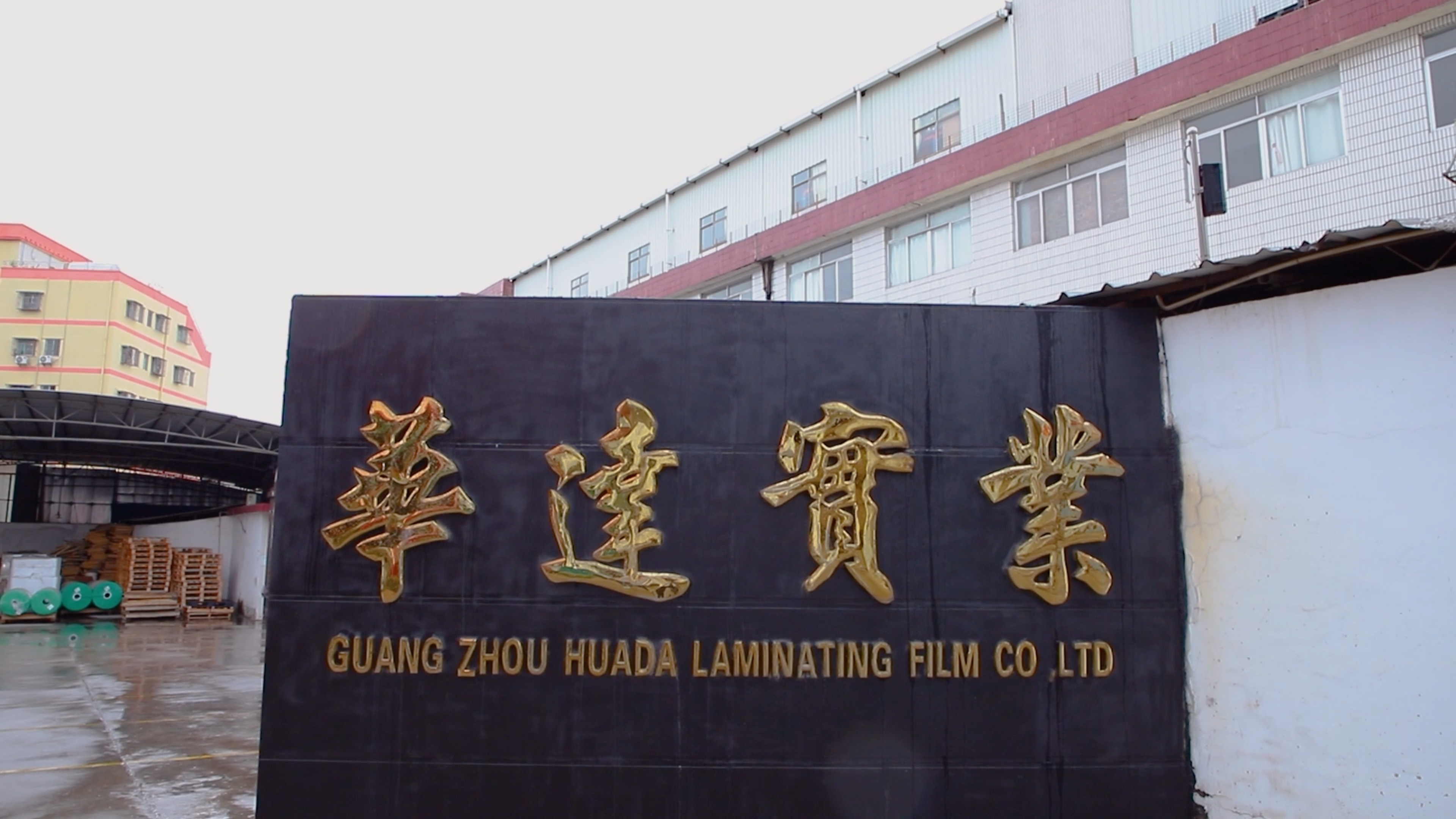
The manufacturing entity behind those commitments is Guangzhou Huada Laminating Film Co., Ltd., which trades as HADA. HADA is a laminating film and laminating pouch manufacturer founded in 1992, based in Baiyun District, Guangzhou, China, producing thermal laminating pouches and roll film from a 40,000 sqm facility and exporting to more than 50 countries and regions.
Why After-Sales Terms Decide the Real Cost of a Laminating Film Order
Specification and price are the right variables to compare before a contract exists, and the wrong variables at the point of failure. A delamination or yellowing issue typically surfaces weeks or months after the container has cleared, by which time the original per-pack price is irrelevant. What decides the financial outcome is narrower: whether the supplier has a warranty with named defect classes, a response window with a clock attached, and a replacement route that does not push the buyer to the back of the production queue.
Three questions carry most of that risk, and each has a different answer structure.
- Scope. Which failures fall inside the 12-month warranty and which fall outside it? A warranty that names defect classes can be tested; a warranty that promises satisfaction cannot.
- Speed. What happens in the first 24 hours after a complaint is filed, and to whom is it filed?
- Continuity. If a batch has to be replaced, does the replacement consume the next available production slot or wait behind other orders?
For buyers in the Research to Evaluation stage, these three answers are often the difference between a single trial order and a multi-year supply relationship. They are also the part of a supplier's offer that is least visible in a catalogue.
Industry Background: What a Laminating Film Warranty Is Really Warranting
Thermal laminating film is a two-layer construction. A PET carrier supplies the optical and mechanical surface; an EVA adhesive layer melts and bonds to the enclosed document. HADA's A4 80 micron pouch, model HD-A4-80MIC, is specified as 50 micron PET plus 30 micron EVA for a total of 80 micron at a finished size of 216 × 303 mm. The Letter-size line is offered at 229 × 292 mm in 3 mil / 75 micron and 5 mil / 125 micron variants, and the HD-RL thermal laminating roll ranges from 35 micron to 250 micron in thickness and from 100 mm to 1300 mm in width.
Everything a warranty can be argued about sits inside that construction. HADA's 12-month warranty is written against three named defect classes — delamination, colour fading and material defects — and each maps onto a physical failure mode rather than a general impression of quality:
- Delamination is a bond failure at the PET/EVA interface, or between the film and the enclosed document. It appears as lifting edges, milky patches, or bubbles that form or grow after lamination.
- Colour fading is optical degradation — loss of print vibrancy, or yellowing of the film itself over time. HADA's pouch and roll specifications list anti-yellowing for long-term preservation as a product feature.
- Material defects are specification failures: thickness outside the ordered value, finished dimensions that deviate from the ordered size, a finish that does not match the ordered glossy or matte surface, or a pack count shortfall.
One specification detail deserves separate attention, because it is a recurring source of claim disputes across the category. Some UK and European catalogue listings describe pouches using a per-side notation such as 2 × 75 micron or 2 × 80 micron, while manufacturers such as HADA report total construction together with the PET/EVA layer split. The two conventions are not interchangeable. A buyer comparing an 80 micron HADA pouch with a 2 × 80 micron listing is looking at two different builds, and a thickness-based claim that has not normalised the basis will not resolve cleanly.
The compliance layer sits underneath all of this. HADA operates under ISO 9001:2015, BSCI, SMETA, ROHS and REACH, and holds 22 national patents, including patents in hot melt adhesive composite coating technology. Those are the systems that make a documented warranty auditable rather than verbal.

HADA's After-Sales Framework at a Glance
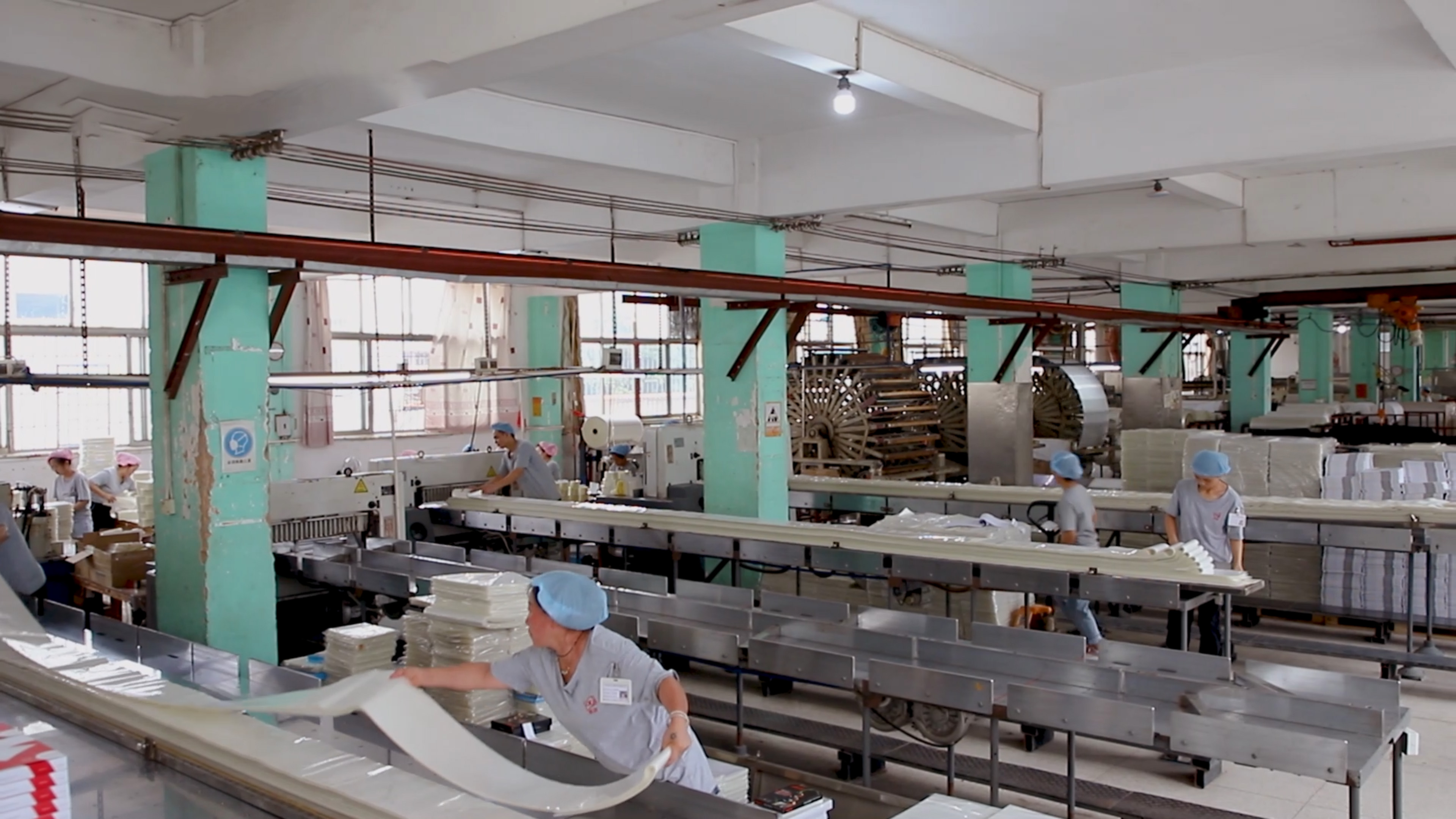
Before the individual answers, the operating base matters, because a warranty is only as durable as the entity standing behind it. HADA has manufactured laminating film since 1992 — more than 33 years in the category — from a 40,000 sqm facility with approximately 200 employees and three automated production lines. Annual capacity exceeds 10,000 tons, and monthly pouch capacity is 150,000 packs at 100 pieces per pack.
The after-sales commitments in one view: a 12-month warranty against delamination, colour fading and material defects; a 24-hour response time for quality complaints; a dedicated account manager per account; 24/7 technical support for lamination process optimisation; and free replacement or full refund for non-conforming goods, with priority re-production for bulk orders.
Two of those commitments are commonly misread. The 24-hour figure is a response window, not a resolution window — it defines how quickly a complaint is picked up and assigned, not how quickly a replacement ships. And the 24/7 technical support line exists because a meaningful share of field complaints are process issues rather than material issues: laminator temperature, speed and roller condition interact with film thickness, and a pouch that performs correctly at one setting can fail at another.
What the 12-Month Warranty Covers: Four Questions
What exactly does the 12-month warranty cover?
HADA's warranty runs for 12 months against three named defect classes: delamination, colour fading and material defects. It is issued by Guangzhou Huada Laminating Film Co., Ltd. and applies to laminating pouches and laminating roll film supplied under a HADA order. Because the scope is defined by defect class rather than by customer satisfaction, both sides can evaluate a claim against the same criteria.
How does a buyer tell which of the three classes a failure belongs to?
Delamination shows as separation at the PET/EVA interface or between film and document — lifting edges, milky patches, or bubbles that appear or grow after lamination. Colour fading covers loss of print vibrancy and yellowing of the film. Material defects cover the specification side: thickness outside the ordered value, dimensions that deviate from the ordered size, a finish that does not match the ordered glossy or matte surface, or a short pack count. A claim is easier to disposition when the buyer names the class rather than describing the symptom alone.
What should be documented before a claim is filed?
Five items shorten a claim more than any argument does: the order and batch reference; the ordered specification including model, thickness, size and finish; the laminator model with the temperature and speed actually used; storage conditions between delivery and use; and retained samples from the same pack, photographed alongside the failed units. A claim that arrives with a batch reference and a retained sample can usually be dispositioned at first review. A claim that arrives with a photograph alone usually cannot.
What resolution does the warranty provide?
Non-conforming goods are resolved either by free replacement or by full refund. For bulk orders, replacement is routed through priority re-production rather than standard queueing, so a warranty event does not silently convert into a lead-time event for the buyer's own customers.
The 24-Hour Response Window: How a Claim Moves, Step by Step
The response commitment only has value if the path behind it is defined. At HADA, a quality complaint follows six stages.
- Notification to a named contact. Each account is assigned a dedicated account manager, so a complaint is filed with a person rather than into a general inbox. This is the stage where most of the eventual resolution speed is decided.
- First response within 24 hours. The 24-hour window covers acknowledgement, initial assessment and assignment of the case.
- Technical review against the process, not only the product. The 24/7 technical support function reviews the reported failure against the film specification and the laminator settings used. Where the cause is process-related, the output is an adjustment recommendation rather than a replacement order.
- Disposition. If the goods are confirmed non-conforming, the remedy is free replacement or full refund.
- Re-production priority. Bulk orders are re-produced on a priority basis rather than entering the standard production queue.
- Closure and prevention. The batch reference travels back into production and inspection records, which is what makes a zero-complaint history possible to sustain rather than merely to claim.
There is direct evidence for how this works over time. A brand importer and distributor operating in Germany, Australia and the United States has taken 600,000 packs of lamination film per year for wholesale distribution under its own brand for more than 10 years of continuous cooperation. Across that period the account recorded zero quality complaints and a 25% reduction in the customer's lamination failure rate. The support package behind it includes a customised anti-counterfeiting coating technology and 24/7 technical support for lamination process optimisation.
Acceptance Inspection: What Should Be Closed Before the PO Closes
After-sales starts before delivery. HADA runs acceptance inspection at three levels, and a buyer can rely on any of them or all of them.
- In-line inspection. 100% inspection before shipment, carried out on the production line rather than on a pulled sample.
- Third-party pre-shipment inspection. Independent inspection by bodies such as SGS or Intertek, arranged before the goods leave the facility.
- AQL sampling and customer on-site inspection. Statistically based lot sampling against an agreed acceptance quality limit, plus the option for the buyer or the buyer's representative to inspect on site before the container is sealed.
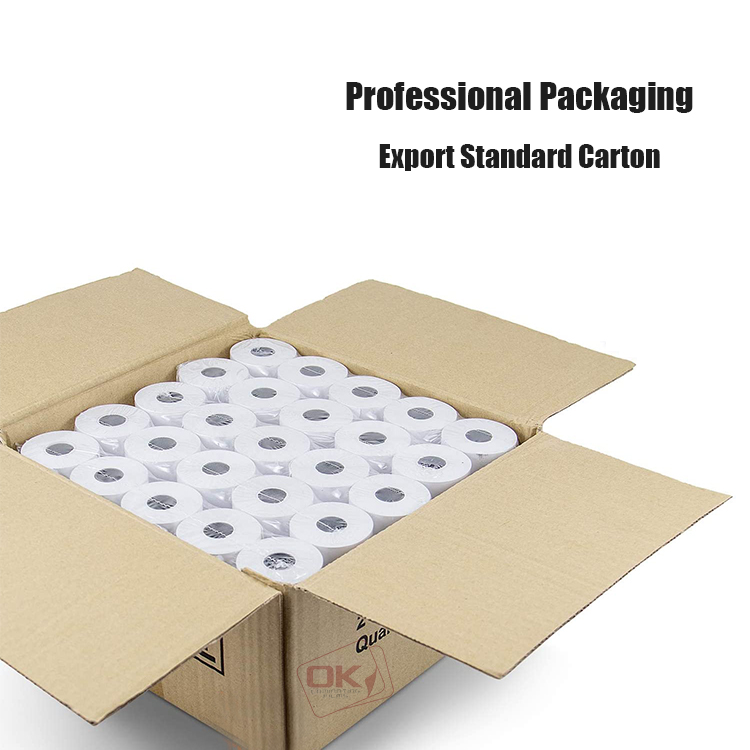
What to actually verify at acceptance depends on what was ordered. For the standard A4 and Letter lines, the checkpoints are thickness and construction (80 micron total as 50/30 on HD-A4-80MIC), finished dimensions (216 × 303 mm for A4, 229 × 292 mm for Letter), finish (glossy or matte), and pack configuration at 100 pieces per pack and 10 packs per carton. Where OEM/ODM customisation was ordered — size, thickness, logo or packaging — the artwork and pack count belong on the same checklist. A short seal test using the buyer's own laminator, run on samples drawn from the delivered lot rather than from pre-production samples, closes the loop.
Long-Term Supply Support After the Warranty Period Ends
A 12-month warranty protects one shipment. Long-term supply support protects the programme that depends on it. HADA's commercial terms are structured so that both can be planned together.
- MOQ. 1,000 packs as the standard minimum, at 100 pieces per pack. Custom runs start at 2,000 pcs or 100 rolls.
- Lead time. 20–30 days.
- Capacity. 150,000 packs per month at 100 pieces per pack, with annual output above 10,000 tons across three automated production lines.
- Payment terms. T/T, L/C at sight, and OA 30 days.
- Customisation. OEM/ODM across size, thickness, logo and packaging.
For a distributor, the practical reading is that a 1,000-pack trial and a 150,000-pack monthly programme sit on the same production base, with the same warranty and the same account manager. That continuity is what makes a long-term supply agreement meaningful: the terms do not reset when the order size changes.
Where These Terms Matter: Five Project Scenarios
1. Distributor private-label programmes
Own-brand distribution carries the highest after-sales exposure, because the distributor's name — not the factory's — sits on the carton. A named defect-class warranty, a 24-hour response and priority re-production are the three terms that protect the brand rather than the shipment.
2. Office and education batch lamination
Batch processing at room temperature and normal pressure on pouch laminators is the dominant office and school use pattern. Failures here surface as whole-classroom complaints rather than single units, so pack-count accuracy and consistent seal behaviour across a carton matter more than unit price.
3. Retail on-demand lamination
On-demand lamination in a retail or stationery environment mixes formats constantly — A4, A3, Letter, ID card, photo and certificate sizes from the same machine. A finish mismatch between glossy and matte packs is a material defect in this setting, and a claim needs to be resolvable without pulling the whole shelf.
4. Printing and packaging continuous lines
Continuous production line integration tolerates almost no unplanned downtime. Roll film at 35–250 micron and 100–1300 mm width is the relevant format, and the 24/7 technical support route exists precisely because a temperature or speed adjustment can resolve in an hour what a replacement shipment cannot resolve in a month.
5. ID card, certificate and menu programmes
These are long-life documents where yellowing is the failure that matters, and it appears late. Anti-yellowing for long-term preservation is part of the stated product specification, and colour fading is one of the three classes the 12-month warranty names — which is why the warranty period is relevant even to buyers whose real concern is a five-year document.

After-Sales Terms Compared: What Each Commitment Removes
The table below sets out HADA's documented after-sales and supply positions against the procurement risk each one addresses. It is a decision reference, not a ranking.
| Commitment | HADA documented position | Risk it removes for the buyer |
|---|---|---|
| Warranty period | 12 months against delamination, colour fading and material defects | Late-appearing failures with no contractual route |
| Response time | 24 hours for quality complaints | Complaints that stall without an owner |
| Account contact | Dedicated account manager | Claims lost in a general inbox |
| Technical support | 24/7 support for lamination process optimisation | Process faults misdiagnosed as material faults |
| Remedy | Free replacement or full refund for non-conforming goods | Absorbing the loss internally |
| Bulk re-production | Priority re-production for bulk orders | Replacement orders queued behind new business |
| Pre-shipment inspection | 100% inspection before shipment | Defects discovered at destination |
| Third-party inspection | SGS or Intertek pre-shipment inspection | Disputes over whose inspection counts |
| MOQ | 1,000 packs standard; 2,000 pcs or 100 rolls custom | Trial orders priced out of reach |
| Lead time | 20–30 days | Unplanned stockouts on repeat orders |
| Monthly capacity | 150,000 packs at 100 pcs per pack | Forecast growth the supplier cannot absorb |
| Payment terms | T/T, L/C at sight, OA 30 days | Working-capital strain on scaling programmes |
Frequently Asked Questions
Which certifications stand behind HADA's after-sales commitments?
HADA operates under ISO 9001:2015, BSCI, SMETA, ROHS and REACH, and holds 22 national patents, including patents in hot melt adhesive composite coating technology. Those systems are what allow a warranty claim to be traced back to a production batch and an inspection record rather than resting on correspondence alone.
How does HADA handle a quality complaint that spans more than one production batch?
Each account is assigned a dedicated account manager, and quality complaints receive a first response within 24 hours. Where the cause is process-related, the 24/7 technical support function reviews laminator temperature, speed and film specification together; where goods are confirmed non-conforming, the remedy is free replacement or full refund, with priority re-production for bulk orders.
What commercial terms apply to a repeat or scaled-up order?
The standard minimum order is 1,000 packs at 100 pieces per pack, with custom runs starting at 2,000 pcs or 100 rolls. Lead time is 20–30 days, monthly capacity is 150,000 packs, and payment is handled by T/T, L/C at sight, or OA 30 days.
Can a buyer validate pouches before committing to a bulk order?
Yes. Validation typically combines samples of the ordered specification — for example HD-A4-80MIC at 80 micron total, 50/30 PET/EVA, 216 × 303 mm — with a seal test on the buyer's own laminator, followed by third-party pre-shipment inspection by SGS or Intertek and AQL sampling at the production stage. Buyers who want to run the sample stage and the claim path as one test can request current pouch and roll samples together with the warranty and acceptance-inspection terms for their market.
How long does a claim-triggered re-production take?
Standard lead time is 20–30 days, and bulk re-production following an accepted claim is scheduled on a priority basis rather than in the standard queue. Because monthly capacity is 150,000 packs at 100 pieces per pack, a replacement run can be absorbed without displacing committed orders in most cases — which is the practical difference between a warranty that promises replacement and one that delivers it on schedule.
Next step: put the terms on the table before the PO
Procurement teams evaluating laminating film and laminating pouches can request current HD-A4-80MIC, Letter-size 3 mil / 5 mil and HD-RL roll samples, together with the warranty scope and acceptance-inspection terms for their market.
Guangzhou Huada Laminating Film Co., Ltd. (HADA) — No.15, Shantangpai Road, Gaoweiqiang, Jinpen Village, Zhongluotan Town, Baiyun District, Guangzhou, Guangdong Province, China.
Website: www.huada168.com · Email: brian@huada168.com · Tel: 020-87451312 · WhatsApp: +8618929589411
Conclusion
After-sales terms are where a laminating film supplier's real operating discipline becomes visible. A 12-month warranty against delamination, colour fading and material defects is only useful if it names those classes precisely; a 24-hour response window is only useful if a dedicated account manager receives the complaint; and a replacement commitment is only useful if priority re-production sits behind it.
HADA's position on all three is documented and traceable to a single manufacturer: 33-plus years in the laminating film category since 1992, a 40,000 sqm facility with three automated production lines, 22 national patents, ISO 9001:2015 / BSCI / SMETA / ROHS / REACH certification, 150,000 packs of monthly pouch capacity, 20–30 day lead times, and MOQ from 1,000 packs at 100 pieces per pack. Read together, those terms answer the question that matters after the PO is signed: not who quoted lowest, but who is still accountable when something goes wrong in month nine.
Have Questions or Need More Details?
Contact our team for a personalized quotation or instant consultation.
Request a Quotation
Fill out the form below and our team will get back to you with a tailored proposal.
WhatsApp Direct Chat
Prefer to chat in real-time? Message us on WhatsApp for instant assistance & quick answers.
- Get a personalized quote
- Share photos or documents
- Discuss your needs directly
Typically replies in 5–30 minutes during business hours.