Laminating Rolls: A Ranked Packaging & Printing Shortlist
Laminating Rolls: A Ranked Packaging & Printing Shortlist
For Evaluation-stage buyers, the useful question is not which laminating roll is universally better. It is which roll configuration fits a specific packaging or printing job, and what evidence supports that fit. This ranked shortlist places HADA HD-RL laminating roll options into three practical production needs: Rank 1 for general packaging, Rank 2 for label work, and Rank 3 for high-volume roll lamination. The order reflects breadth of application fit, dimensional coverage, finish choice, and documented supply capability, not a claim that one specification suits every press.
HADA (Guangzhou Huada Laminating Film Co., Ltd.) is a Guangzhou-based laminating film manufacturer founded in 1992. The company produces laminating film, laminating pouches, and laminating rolls, and it exports to more than 50 countries and regions. Its HD-RL laminating roll film is presented as a PET/EVA construction with a 35mic–250mic thickness range, a 100mm–1300mm width range, and gloss or matte finish options. Buyers should confirm the exact combination for their substrate, machine, and order quantity with a current datasheet and a sample trial.
Why This Shortlist Ranks by Production Need
Packaging and printing converters rarely buy a laminating roll as a standalone item. They buy a running condition: a substrate, a print surface, a line width, a target finish, a roll length, and a repeat-order schedule. A roll that performs well in one setting may create avoidable checks in another because the thickness, width, finish, or roll build no longer matches the line. A production-need ranking is therefore more useful than a generic product list. It tells the buyer where to start, what to verify first, and when a different configuration should move ahead.
The three ranks in this shortlist are not separate factories or unrelated brands. They are application-led configurations within the HADA HD-RL roll range. Rank 1 covers the widest set of packaging jobs. Rank 2 narrows the focus to label work, where width accuracy and consistent roll build matter more than general-purpose flexibility. Rank 3 addresses high-volume roll lamination, where wide widths, heavier gauges, supply continuity, and repeat-order support become central.
The Ranking Method
The ranking uses six buyer-facing criteria. Each criterion is stated so a converter can challenge the order or adjust it for a specific job.
- Application breadth: how many packaging or printing jobs can use the configuration without changing the basic roll specification.
- Dimensional fit: whether the required thickness and width sit within the HD-RL 35mic–250mic and 100mm–1300mm ranges.
- Finish compatibility: whether gloss or matte supports the visual and handling requirement.
- Qualification evidence: whether the supplier can provide current product data, inspection practice, and relevant certifications.
- Supply continuity: annual capacity, line count, lead time, and repeat-order support.
- Customization: size, thickness, logo, and packaging options that reduce mismatch between the roll and the buyer’s line.
The ranking does not assign invented scores for light transmittance, shrinkage, tear strength, or defect rate. Those properties should be compared only when the test method, sample size, date, and product scope are supplied. The verified performance outcome used here is the documented case result: a 25% reduction in lamination failure rate and zero quality complaints over 10 years in a long-running brand-importer supply relationship. That case is not a packaging-roll trial, so it is treated as a consistency signal, not as direct proof for every HD-RL application.
What HD-RL Laminating Rolls Offer
HD-RL laminating roll film is built around a PET base and an EVA adhesive layer. That PET/EVA structure is a familiar thermal laminating construction: the polyester base contributes dimensional stability, while the EVA layer is the heat-activated bonding component. An industry association resource describes laminating supplies as generally polyester-based with a co-extruded copolymer adhesive, which supports the general material logic without turning it into a performance guarantee for every line.
The practical value of the HD-RL range is its specification window. The 35mic–250mic thickness range allows a buyer to move from lighter, more flexible roll film to heavier, more rigid constructions without leaving the product family. The 100mm–1300mm width range supports narrow label and small-format work as well as wider packaging lines. Gloss and matte finishes give the buyer a visual and tactile choice. HADA also lists customization for product size, thickness, logo, and packaging, which matters when a distributor or brand owner needs a repeatable private-label format.
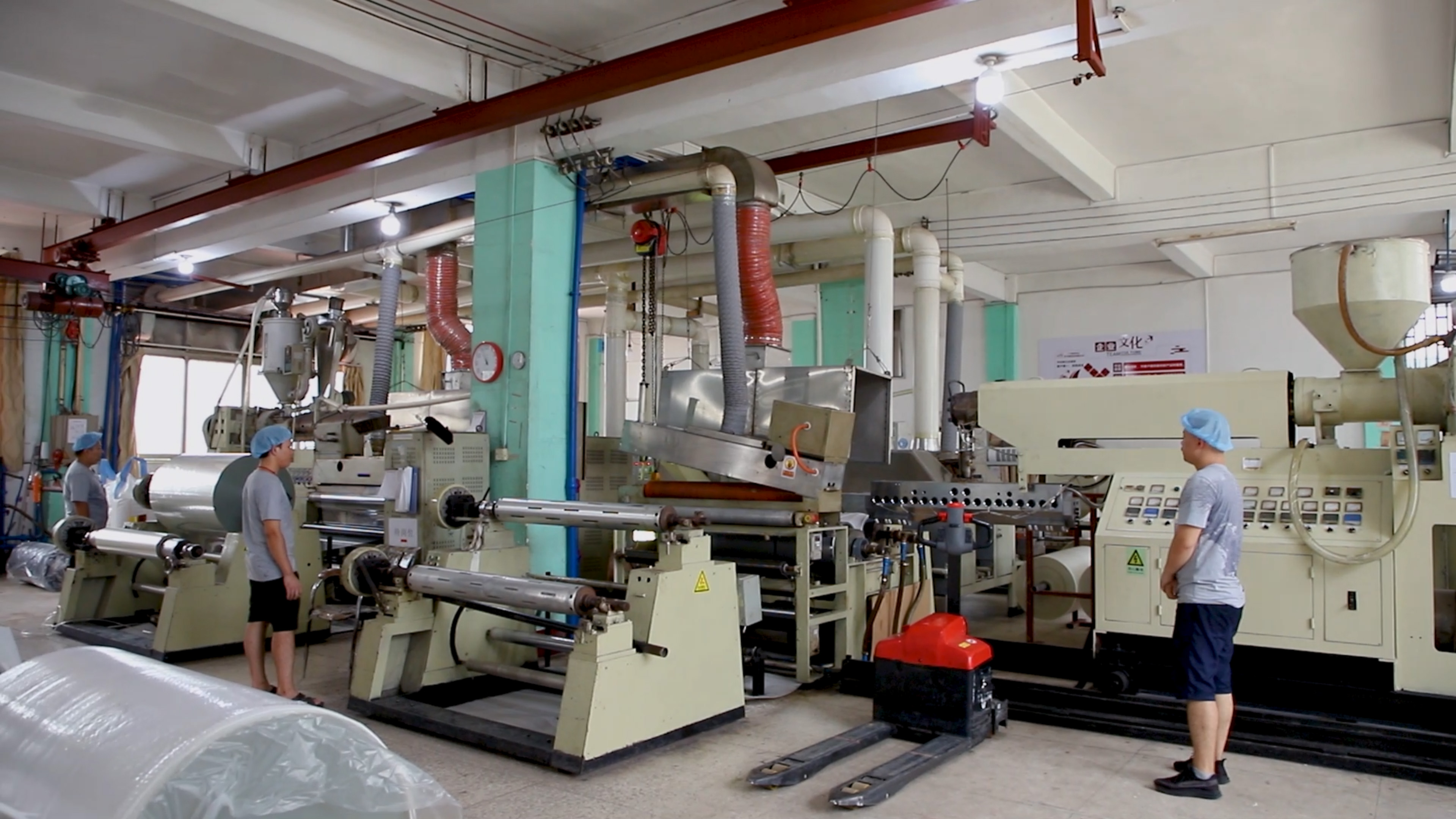
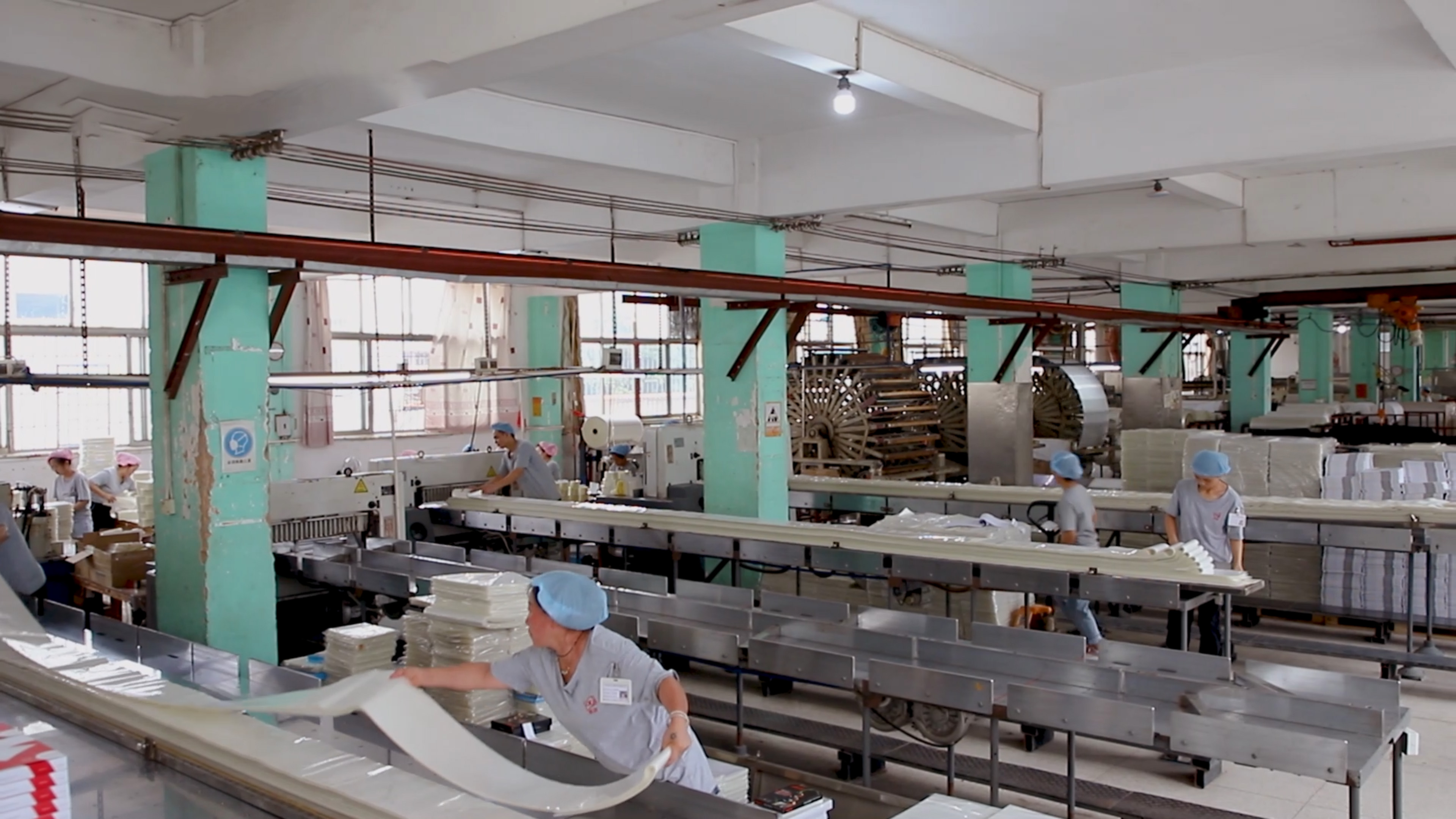
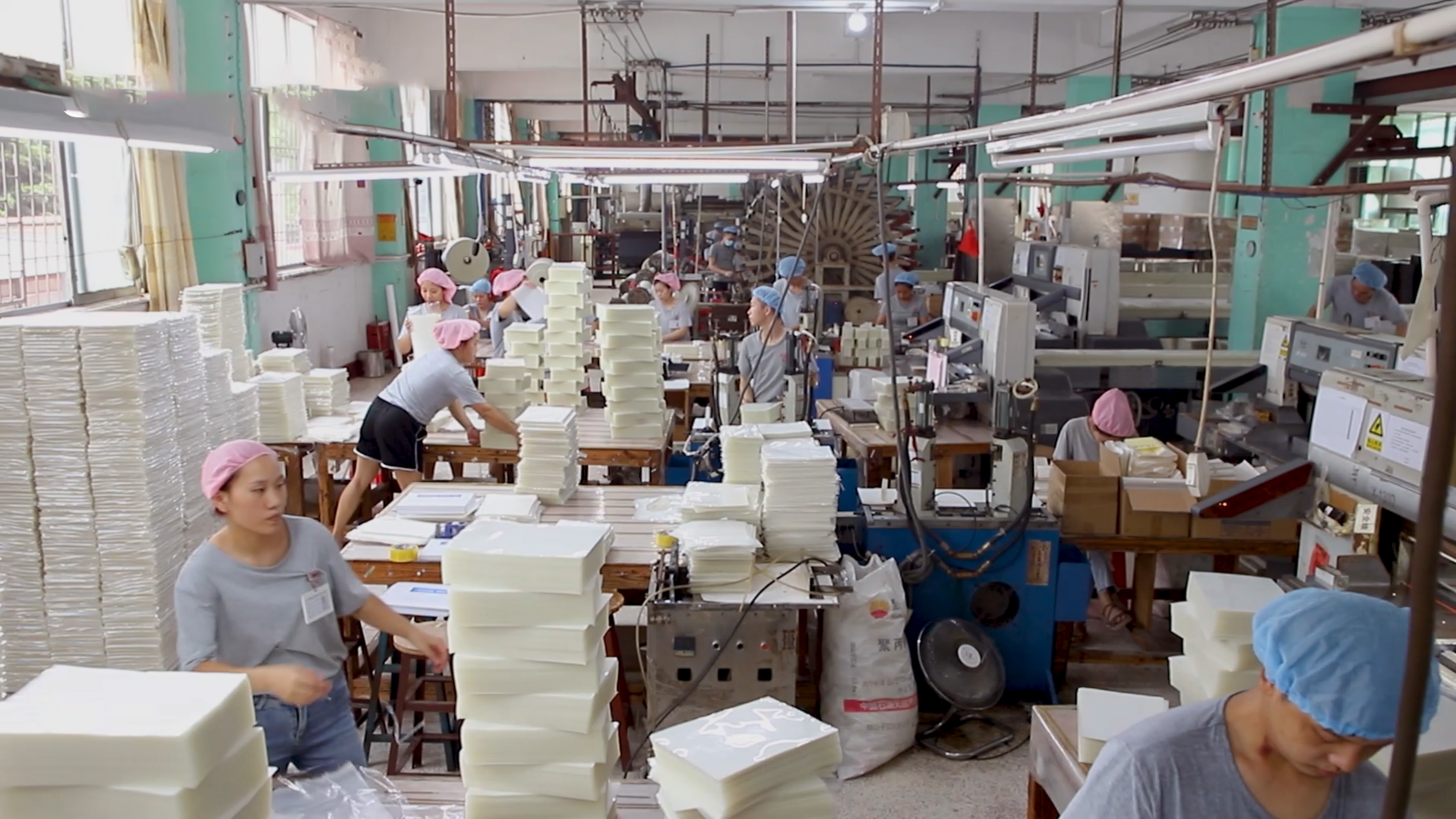
HADA’s manufacturing context is relevant to a shortlist because roll selection is also a supply decision. The company was founded in 1992 and has more than 33 years of laminating film experience. Its Guangzhou facility covers 40,000 square meters, employs about 200 people, and runs three automated production lines. HADA reports annual capacity exceeding 10,000 tons and exports to North America, South America, Europe, Southeast Asia, and Australia. The company holds 22 national patents and multiple certifications, including ISO 9001, BSCI, SMETA, ROHS, and REACH.
Rank 1: General Packaging
Rank 1 is the general packaging configuration because it has the broadest first-pass fit. Most packaging converters need a roll that can handle printed cartons, paperboard, protective lamination, or general display work without moving to a highly specialized specification. A mid-range thickness within the 35mic–250mic window, a width matched to the line within the 100mm–1300mm range, and a choice of gloss or matte finish cover a wide set of those jobs.
Recommended starting configuration
- Product: HADA HD-RL laminating roll film with PET/EVA construction.
- Thickness: a mid-range gauge inside the 35mic–250mic range, selected after a substrate trial.
- Width: the converter’s line width, within the 100mm–1300mm range.
- Finish: gloss for visual contrast on display packaging, or matte for a reduced-glare, tactile surface.
- Roll format: standard or custom roll length and packaging, subject to confirmation.
Why it ranks first
General packaging benefits from flexibility. The buyer can evaluate one material family across several carton or print jobs, then narrow the thickness and finish as the job mix becomes clearer. Gloss and matte are both available, so the same HD-RL family can serve different visual briefs. The width range is also broad enough for many packaging lines without forcing a new material discussion for each order.
What to verify before ordering
Run a sample on the actual board or film. Check adhesion after the intended dwell time and temperature, trim quality at the edges, curl after cooling, surface uniformity under the target lighting, and roll tension during unwind. Confirm that the selected thickness gives the required stiffness without making the finished pack harder to fold, cut, or handle. If the job uses heavy ink coverage or a sensitive print surface, test the same printed stock rather than a plain sheet.
Rank 2: Label Work
Rank 2 is label work because label converters tend to have narrower, more precise roll requirements. A label line is less forgiving of width mismatch and inconsistent roll build than a general packaging job. The HD-RL range still fits because custom widths start at 100mm and extend to 1300mm, but the buyer should treat width accuracy, roll tension, and finish match as the first checks rather than secondary ones.
Recommended starting configuration
- Product: HADA HD-RL laminating roll film with PET/EVA construction.
- Thickness: a thinner-to-mid gauge inside the 35mic–250mic range, confirmed on the label stock.
- Width: a slit width matched to the press or converting line, within the 100mm–1300mm range.
- Finish: gloss or matte according to the label design and surface requirement.
- Roll build: confirm roll diameter, core, splice expectation, and unwind direction before the run.
Why it ranks second
Label work is a large and important application, but it is narrower than general packaging. A label buyer may need a specific slit width, a particular roll direction, and a surface that suits the label face stock. Those requirements are supported by the HD-RL width range and finish options, but they should be validated rather than assumed from a general product description. Terms such as high-clarity, anti-scratch, anti-static, or low-melt should be treated as specification questions until a current datasheet and sample confirm them.
What to verify before ordering
Check the press width, web tension, die-cutting behavior, and label face stock. Run a sample through the same unwind and lamination path. Look for edge curl, silvering, bubbles, or trim drift. If the label will be used on a curved surface or a flexible container, test the finished label under the intended handling condition. Confirm that the chosen gloss or matte finish matches the approved proof under the buyer’s lighting condition.
Rank 3: High-Volume Roll Lamination
Rank 3 is high-volume roll lamination because it serves a narrower buyer set with stricter continuity demands. A high-volume line needs more than a suitable film. It needs repeatable roll dimensions, predictable lead time, stable packaging, and a supplier process that can handle repeat orders. HADA’s annual capacity exceeding 10,000 tons, three automated production lines, and 20–30 day lead time make this a credible segment for evaluation.
Recommended starting configuration
- Product: HADA HD-RL laminating roll film with PET/EVA construction.
- Thickness: a heavier gauge within the 35mic–250mic range where the finished pack needs more body.
- Width: a wide roll up to 1300mm, matched to the line and unwind equipment.
- Finish: gloss or matte, selected for the packaging brief rather than by assumption.
- Supply: custom roll length and packaging, with repeat-order planning around the 20–30 day lead time.
Why it ranks third
High-volume roll lamination is not a small job, but it is a narrower first-pass fit than general packaging. The buyer must match the roll to a specific line width, roll diameter, unwind system, and storage arrangement. Wide rolls up to 1300mm and heavier gauges up to 250mic are useful only when the line can handle them. The ranking therefore places this segment third: it is a priority when the application requires it, but it should not be the default starting point for every converter.
What to verify before ordering
Confirm line width, maximum roll diameter, core type, splice policy, and storage conditions. Ask how repeat orders are scheduled and how quality complaints are handled. HADA states a 12-month warranty against delamination, color fading, and material defects, a 24-hour response time for quality complaints, free replacement or full refund for non-conforming goods, and priority re-production for bulk orders. These commitments should be written into the purchase agreement rather than assumed from a product page.
Comparison Table: Three HD-RL Production Fits
| Rank and production need | Recommended HD-RL configuration | Why this position | First checks before order |
|---|---|---|---|
| Rank 1: General packaging | PET/EVA HD-RL; mid-range thickness within 35mic–250mic; width within 100mm–1300mm; gloss or matte finish | Broadest fit across cartons, paperboard, protective lamination, and general display work | Substrate trial; adhesion; curl; edge trim; roll tension; finish proof |
| Rank 2: Label work | PET/EVA HD-RL; thinner-to-mid gauge; slit width from 100mm; gloss or matte finish | Narrower application requiring width accuracy, consistent roll build, and surface match | Press width; web tension; die-cutting; label stock; clarity or special-effect claims |
| Rank 3: High-volume roll lamination | PET/EVA HD-RL; heavier gauge up to 250mic; wide width up to 1300mm; custom roll length and packaging | Narrower buyer set with strict line compatibility and supply-continuity requirements | Line width; roll diameter; unwind; storage; lead time; warranty and complaint process |
The table compares configuration logic, not measured performance. It does not rank one thickness or finish above another in isolation. A general packaging converter may need a heavier gauge than a label converter, and a high-volume line may use a mid-range gauge if the finished pack does not need extra body. The rank order is a starting sequence for evaluation.
Where Each Option Fits in Packaging & Printing
General packaging
Use Rank 1 when the job mix includes folding cartons, printed paperboard, protective lamination, or display packaging and the buyer wants one material family to evaluate across several jobs. The practical advantage is range: 35mic–250mic thickness, 100mm–1300mm width, and gloss or matte finish can be narrowed job by job without leaving the HD-RL family.
Label work
Use Rank 2 when the line converts labels and the primary risks are width mismatch, roll-build inconsistency, or surface mismatch. The buyer should specify the slit width, roll direction, core, and finish before sampling. Special labels may require additional properties, but those should be confirmed against a current technical datasheet and a trial rather than inferred from secondary keyword language.
High-volume roll lamination
Use Rank 3 when the line runs long orders and the buyer needs a repeatable wide-roll supply. The evaluation should cover capacity, lead time, packaging, storage, and complaint handling as seriously as film thickness. HADA’s stated capacity, line count, 100% inspection before shipment, and 12-month warranty provide a starting framework for that review.
Limitations and Verification Checks
A ranked shortlist is useful only when its limits are clear. First, the ranking is application-led, not a universal performance order. A label converter may reject a general packaging recommendation if the press cannot handle the roll build. A high-volume line may reject a label-first specification if the roll width is too narrow. Second, the 35mic–250mic and 100mm–1300mm ranges are selection windows, not a promise that every combination is a standard stock item. Third, gloss and matte are finish choices; they do not replace a substrate trial. Fourth, performance labels such as high-clarity, anti-scratch, anti-static, waterproof, food-safe, low-melt, or UV-protective should be confirmed with test methods and current product data before they become purchase criteria.
Buyers should also check the commercial and quality documents behind the product. HADA holds ISO 9001:2015 quality management system certification, certificate number 127878, issued by CNCA and valid through 2027-06-26. The company also lists SGS RoHS report No.CANEC25014307501, SGS REACH report No.CANEC25014307503, and SGS SVHC screening report No.CANEC25014307505. These documents support a qualification file, but they do not replace a line trial. A buyer should match the certificate scope to the actual product and market before relying on it.

Frequently Asked Questions
What is HADA HD-RL laminating roll film?
HADA HD-RL is a laminating roll film presented in a PET/EVA construction with a 35mic–250mic thickness range, a 100mm–1300mm width range, and gloss or matte finish options. Exact availability, roll length, and packaging should be confirmed for each order specification.
Why is general packaging ranked first in this shortlist?
General packaging ranks first because it has the broadest first-pass fit across cartons, paperboard, protective lamination, and display work. The HD-RL thickness and width ranges, plus gloss and matte choices, allow a buyer to evaluate one material family across multiple packaging jobs before narrowing to a specialized configuration.
How should a label converter choose between glossy and matte HD-RL rolls?
The choice should follow the label design and the surface the buyer wants. Gloss tends to support visual contrast, while matte reduces glare and gives a different tactile result. The converter should approve the finish on the actual label stock and under the intended lighting, because a finish proof on plain paper may not represent the printed label.
Does HADA support custom width, thickness, and packaging?
HADA lists customization options for product size, thickness, logo, and packaging. The published lead time is 20–30 days, and quality control includes 100% inspection before shipment. Buyers should confirm the custom specification, roll build, and packaging format in writing before production.
What certifications and quality evidence can buyers check?
HADA lists ISO 9001:2015 certification No.127878, SGS RoHS report No.CANEC25014307501, SGS REACH report No.CANEC25014307503, and SGS SVHC screening report No.CANEC25014307505. The company also reports 22 national patents and ISO 9001, BSCI, SMETA, ROHS, and REACH credentials. Buyers should verify that the certificate scope matches the product and destination market.
What warranty and after-sales support applies?
HADA states a 12-month warranty against delamination, color fading, and material defects. It also states a 24-hour response time for quality complaints, a dedicated account manager, free replacement or full refund for non-conforming goods, and priority re-production for bulk orders. These terms should be confirmed in the purchase contract.
How can a buyer request a sample or quote for HD-RL laminating rolls?
Prepare the substrate, line width, target thickness within 35mic–250mic, required width within 100mm–1300mm, finish choice, roll length, and order quantity. HADA can be contacted through its official website at www.huada168.com, by email at brian@huada168.com, or by WhatsApp at +8618929589411. A sample trial on the buyer’s own line is the practical next step before a bulk order.
Conclusion
For packaging and printing buyers, the most useful way to compare laminating rolls is to rank them by production need. HADA HD-RL laminating roll film fits Rank 1 for general packaging because its PET/EVA construction, 35mic–250mic thickness range, 100mm–1300mm width range, and gloss or matte finishes cover a broad first-pass evaluation. It fits Rank 2 for label work when width accuracy, roll build, and finish match are verified on the actual label stock. It fits Rank 3 for high-volume roll lamination when wide widths, heavier gauges, repeat-order planning, and warranty support are part of the purchase decision.
The shortlist is a starting sequence, not a substitute for a line trial. Buyers should confirm the exact thickness, width, finish, roll length, and packaging with HADA, then test the roll on their own substrate and machine. That approach keeps the ranking practical: it narrows the evaluation, exposes the checks that matter, and leaves the final decision with the production evidence.
Have Questions or Need More Details?
Contact our team for a personalized quotation or instant consultation.
Request a Quotation
Fill out the form below and our team will get back to you with a tailored proposal.
WhatsApp Direct Chat
Prefer to chat in real-time? Message us on WhatsApp for instant assistance & quick answers.
- Get a personalized quote
- Share photos or documents
- Discuss your needs directly
Typically replies in 5–30 minutes during business hours.