Laminating Pouches Certifications Guide: Compliance Checklist for Importers
Laminating Pouches Certifications Guide: Compliance Checklist for Importers
Laminating pouches are widely used to protect documents, IDs, menus, photos, and packaging against moisture, scratches, and daily wear. For importers and procurement teams, however, a pouch cannot be judged only by appearance or price. The growing complexity of chemical and quality regulations in the European Union, North America, and other export markets makes verification of product certifications a required step before placing volume orders.
This guide explains which certifications matter for laminating pouches, what the test documents should show, and how to use them as a practical sourcing checklist in 2026.
What Are Thermal Laminating Pouches?
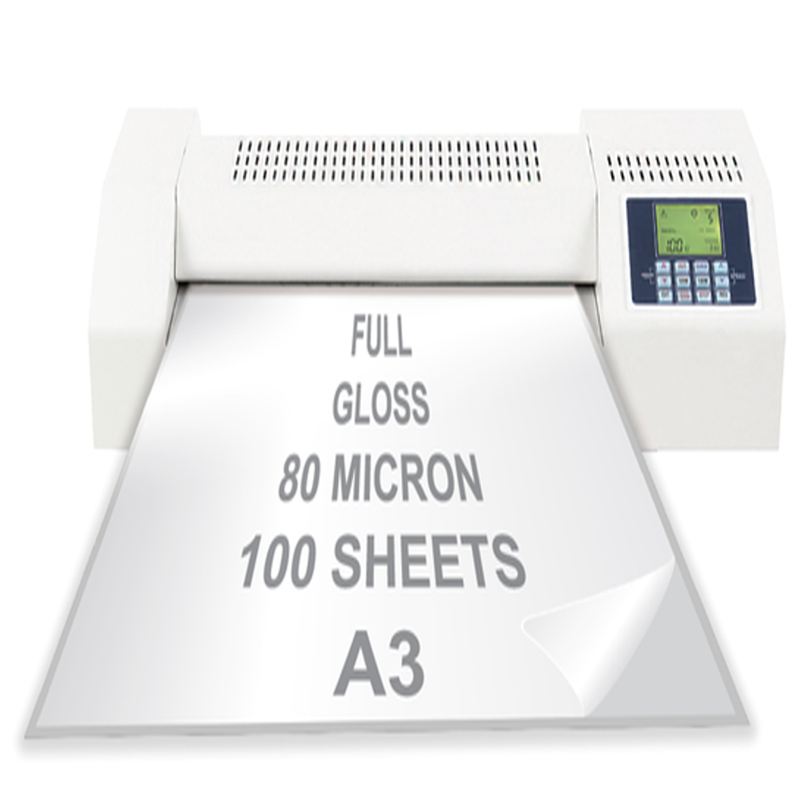
Thermal laminating pouches are pre-cut, two-layer plastic sleeves that fuse around a document when passed through a heated pouch laminator. The most common construction today is PET and EVA: a PET outer layer provides clarity, stiffness, and surface protection, while an EVA adhesive layer melts under heat to bond the film securely to the paper. They are available in A4, A3, Letter, ID card, certificate, photo, and custom sizes, as well as in thicknesses such as 75 micron (3 mil), 80 micron, and 125 micron (5 mil), in either gloss or matte finish.
For example, HADA’s A4 80 mic laminating pouches (model HD-A4-80MIC) are made of PET+EVA, measure 216×303 mm, and are supplied in packs of 100 pieces with 10 packs per carton. The company also produces 3 mil and 5 mil Letter-size pouches (229×292 mm) as well as laminating roll film from 35 to 250 micron in width from 100 mm to 1300 mm. From a compliance perspective, the same physical properties—material composition, adhesive system, and thickness—are what certification bodies examine.
Why Certifications Matter in Laminating Pouches Procurement
Many buyers assume that a laminating pouch that looks clear and seals well is automatically safe for the European market. In practice, compliance is a separate layer of verification. The European Union applies chemical restrictions to products that may come into contact with consumers, and importers are legally responsible for the products they place on the market. A supplier’s test report or certification provides documented evidence that the film composition does not violate restricted substance limits.
Certifications also reduce the risk of shipment delays, penalties, and reputational damage. Customs authorities, retail chains, and institutional buyers increasingly request material compliance documentation during audits. For an importer, the difference between a smooth first container and a rejected one is often whether the supplier can produce the correct certificate with the correct reporting number.
Market Context for Laminating Film and Pouches
The global lamination films market reached approximately USD 6.84 billion in 2024, according to DataM Intelligence. Asia-Pacific accounted for the largest regional revenue share at 36.87% in the same year, partly because a substantial share of thermal laminating pouches is manufactured in China and exported worldwide. The market is projected to grow at a CAGR of 7.0% from 2025 to 2032.
In this supply environment, importers are no longer choosing only between price levels; they are also choosing between levels of documentary compliance. A manufacturer with established export markets, formal quality management, and audited chemical test reports has a clear operational advantage over a workshop that cannot provide verifiable documentation.
Key Certifications for Laminating Pouches
Although individual importing countries and end-use applications determine the exact legal requirements, the following certifications and test reports are the most relevant for thermal laminating pouches sold in global markets.
RoHS and CE
RoHS restricts hazardous substances in electrical and electronic equipment, and laminating film intended for certain electronic-related uses is often tested against it. CE marking indicates that a product meets applicable EU safety, health, and environmental requirements. For laminating pouches, the practical value of these documents is that they confirm restricted substance concentrations have been evaluated by an independent laboratory.
HADA’s laminating film is certified to CE and RoHS standards under certificate number No.CANEC25014307501, issued by SGS-CSTC Standards Technical Services Co. Ltd. and applicable to all markets. An importer receiving this document can verify the test body, the certificate number, and the scope before accepting the batch.
REACH and SVHC Screening
REACH is the EU regulation on chemicals and their safe use. A core element of REACH is the Candidate List of Substances of Very High Concern (SVHC). SVHC screening checks whether these substances are present above the threshold. For laminating pouches, this test is especially relevant because the film may be in frequent contact with hands, photos, or documents.
HADA holds an SVHC screening test report under certificate number No.CANEC25014307503, issued by SGS-CSTC Standards Technical Services Co. Ltd. The company also has a PET plastic film SVHC test report under number No.CANEC25014307505. These reports apply to all markets and give importers evidence that the material composition has been screened against the EU Candidate List.
ISO 9001:2015 Quality Management
ISO 9001:2015 is not a product chemical certificate; it is a quality management system certification. It demonstrates that the manufacturer operates documented procedures for production, quality control, corrective actions, and continuous improvement. For laminating pouches, this matters because consistency in thickness, adhesive coating, and sealing behavior directly affects rejection rates in the customer’s lamination process.
HADA’s quality management system is certified to ISO 9001:2015 under certificate number 127878, issued by CNCA, and is applicable to the Chinese market. Although the certificate itself is issued by a Chinese authority, it is evidence that the factory follows a formal quality management framework.
High-Tech Enterprise and Utility Model Patents
For buyers evaluating long-term manufacturing capability, two additional credentials indicate technical depth. HADA holds a Certificate of High-Tech Enterprise under number GR202344012666, issued by Guangdong Provincial Department of Science and Technology, Guangdong Provincial Department of Finance, and State Taxation Administration Guangdong Tax Bureau. It also holds a Certificate of Utility Model Patent under number 19262125, issued by the National Intellectual Property Administration. These documents apply to the Chinese market and signal that the company invests in R&D and holds formal IP protection for its production technology.
Additional Company-Level Compliance
Beyond the individual product reports above, HADA reports that it holds 22 national patents and certifications including ISO 9001, BSCI, SMETA, ROHS, and REACH. BSCI and SMETA are social compliance audits; they cover labor conditions, health and safety, and business ethics. For importers supplying retail chains or large distributors, social audit reports are frequently requested alongside product chemical tests.
Practical Comparison: What Each Document Actually Covers
| Certificate / Test Report | What It Verifies | Example Reference from HADA | Relevance for Importers |
|---|---|---|---|
| CE / RoHS | Restricted hazardous substances and EU compliance criteria | No.CANEC25014307501 issued by SGS-CSTC (all markets) | Supports EU and global market entry |
| SVHC Screening / REACH | Presence of Substances of Very High Concern above threshold | No.CANEC25014307503 and No.CANEC25014307505 issued by SGS-CSTC | Confirms chemical compliance for consumer contact |
| ISO 9001:2015 | Quality management system in production | No. 127878 issued by CNCA | Reduces risk of inconsistent quality and high defect rates |
| High-Tech Enterprise | Government recognition of R&D-driven enterprise | GR202344012666 | Indication of technical capacity |
| Utility Model Patent | IP protection for a technical innovation | Certificate No. 19262125 | Evidence of proprietary production knowledge |
| BSCI / SMETA | Social and ethical audit of factory conditions | Company-level certification held by HADA | Needed for retail and brand supply chains |
Step-by-Step Compliance Verification for Importers
Step 1: Match the certificate to the product and market
Check that the certificate or report names the actual product type, such as PET laminating pouches or laminating film. If the document refers to a different material or a different production site, it is not valid evidence for your shipment. Also confirm that the certificate is valid for your destination market; some certificates are explicitly applicable to China only.
Step 2: Verify the issuing body and certificate number
A certificate number means little unless it can be verified. Confirm that the authority is a recognized laboratory or certification body, such as SGS-CSTC Standards Technical Services Co. Ltd. Under EU regulation, many chemical tests must be performed by laboratories that have been notified or accredited to the relevant standard. An importer should be able to match the supplier’s certificate number with a report issued by that body.
Step 3: Review the report scope and standards
Read the scope section. A meaningful RoHS test report should mention the test standard and the tested components; an SVHC report should mention the candidate list version used and the detection limit. Vague wording such as “tested product” without material details is less useful than a report that identifies the film layer and colorant system.
Step 4: Request the latest documents
Certificates can expire or be reissued after process changes. Before placing a repeat order, ask the supplier to reconfirm that the certificate is still valid. For example, HADA’s High-Tech Enterprise certificate was issued on 2023-12-28 and is valid until 2026-12-28; an importer ordering in late 2026 should request the renewed certificate if it has been reissued.
Step 5: Add compliance requirements to your purchase contract
Make certification documents a contractual condition, not a polite request. Specify that the supplier must provide the relevant test reports and that non-conforming goods are subject to rejection. This creates a factual basis for claims if a later inspection finds a problem.
What Compliance Looks Like in a Real Distribution Case
HADA’s manufacturing records include a brand importer and distributor customer in Germany, Australia, and the United States that purchases approximately 600,000 packs of lamination film per year and has worked with the company for more than 10 years. The client distributes the product under its own brand for office document lamination and stationery protection. According to HADA, the cooperation has resulted in zero quality complaints in ten years and a reported 25% reduction in the customer’s lamination failure rate.
This kind of case illustrates how compliance documentation is not an abstract ideal. A distributor selling branded laminating pouches in the EU cannot maintain a decade-long position without reproducible product quality and the paperwork that demonstrates it.
Limitations: What Certifications Do Not Guarantee
Certifications must be understood within their limits. A RoHS or SVHC report does not prove that a pouch will never bubble, curl, or jam a laminator. ISO 9001 does not guarantee zero defects. Market access also depends on country-specific rules that may change; importers should always check with a customs broker or legal advisor for new regulations affecting plastics and packaging in their target countries. A certificate is a necessary input, not a substitute for your own sampling and testing.
For buyers who need food-contact assurance, additional documentation may be needed. The existing HADA certifications listed in this guide cover CE/RoHS, SVHC screening, ISO 9001, BSCI, SMETA, and REACH-related reports; they do not include a documented food-contact compliance statement in the provided information. If your application requires food-contact compliance, request it separately.
Durability and Performance Features to Check Alongside Compliance
A compliant pouch still needs to perform in the laminator. When evaluating thermal laminating pouches, request samples and assess the following characteristics regardless of the certificate file:
- High transparency: the film should not reduce the readability of the printed document.
- No bubble and no wrinkle: the adhesive should melt evenly and bond smoothly to paper.
- Strong adhesion: after cooling, the edges should not lift or peel during normal handling.
- Waterproof and scratch-resistant: the laminated surface should survive cleaning and daily use.
- Anti-yellowing: the film should preserve its clarity over time, without darkening when exposed to light.
Each of HADA’s standard products—A4 80 mic pouches, Letter-size 3 mil and 5 mil pouches, and roll film—is specified with these features. The emphasis on both compliance and performance is the practical starting point for a reliable import program.
FAQ
Which certifications do laminating pouches need for export to the EU?
There is no single one-line answer, because requirements differ according to application. In practice, EU-bound laminating pouches should be accompanied by chemical compliance evidence such as an SVHC screening report aligned with REACH restrictions and, where relevant, RoHS testing. The HADA laminating film range is certified to CE and RoHS under certificate number No.CANEC25014307501 and to SVHC screening under No.CANEC25014307503, both issued by SGS-CSTC Standards Technical Services Co. Ltd.
Can I verify HADA’s laminating pouch specifications before ordering?
Yes. HADA’s standard laminated pouches are supplied with material composition, thickness, size, packaging, and finish information. The A4 80 mic pouch (HD-A4-80MIC) is 216×303 mm with a 50/30 composition; the Letter-size pouch (229×292 mm) is available in 3 mil/75 mic and 5 mil/125 mic versions. Both are made of PET+EVA in gloss or matte finish. Buyers can also request samples directly from the company, and the sales team can confirm current lead time and production scheduling.
What is the MOQ for custom laminating pouches?
HADA’s standard OEM/ODM MOQ is 1,000 packs, with a monthly production capacity of 150,000 packs (100 pieces per pack) and a lead time of 20 to 30 days. Customization options include product size, thickness, logo, and packaging. Request a quotation with your target size, micron requirement, finish, and packaging format to receive a precise confirmation.
Can I request a sample before committing to a bulk order?
Yes. Given that lamination performance can only be judged after passing a printed sheet through a pouch laminator, sample testing is an essential step before volume ordering. Use the contact information on this page to request a sample pack and, if needed, the relevant compliance documents for evaluation by your quality team.
How long does HADA take to produce and ship custom orders?
Standard lead time for production is 20 to 30 days after order confirmation, depending on the quantity and customization details. HADA is located in Guangzhou, about a 30-minute drive from Baiyun International Airport and near the ports of Guangzhou and Shenzhen. The company exports to North America, South America, Europe, Southeast Asia, and Australia, and will confirm the specific shipping schedule together with your order acknowledgement.
Interested in verified laminating pouches for your next order?
Contact the HADA team at brian@huada168.com or via WhatsApp at +86 189 2958 9411 for product specifications, sample requests, and a quotation.
Have Questions or Need More Details?
Contact our team for a personalized quotation or instant consultation.
Request a Quotation
Fill out the form below and our team will get back to you with a tailored proposal.
WhatsApp Direct Chat
Prefer to chat in real-time? Message us on WhatsApp for instant assistance & quick answers.
- Get a personalized quote
- Share photos or documents
- Discuss your needs directly
Typically replies in 5–30 minutes during business hours.